

Table of Contents
Table of Contents
Key Points
- The Cardus Education Survey (CES), conducted in Canada in 2012, 2016, 2018, and now in 2026, examines a range of outcomes for a nationally representative sample of 3,070 high school graduates aged 24 to 39 across the four largest Canadian educational sectors: language-majority public schools, language-minority public schools, Catholic public schools and independent schools. The CES controls for a range of respondents’ demographic background characteristics in order to allow for estimating school effects—meaning, the difference that attending a specific kind of school makes.
- The CES asks respondents about a holistic range of academic, spiritual, cultural, civic, and relational outcomes, and about their life patterns, views, and choices, and their contribution to a shared good. This report examines the differences between independent religious (Protestant and Catholic) school graduates and their peers from independent non-religious schools and public schools.
- Graduates of all independent school types are more likely than their public school counterparts to rate positively the quality of their education, preparation for success in post-secondary academic settings, and preparation for success in a job or career. They are also more likely to report that their school was a “close-knit community” and to include school principals among those with whom they had positive relationships at their school.
- Graduates of independent religious schools generally showed stronger patterns of outcomes related to faith formation and family formation (defined as likelihood of being married and having children), compared with those of independent non-religious schools.
- On many common-good outcomes, including volunteering and charitable giving, graduates of independent religious schools (both Protestant and Catholic) match—and in some cases, outperform—graduates of independent non-religious schools, suggesting that these religious schools are contributing to the common-good outcomes necessary for life together in a pluralistic society.
Introduction
Research has consistently demonstrated differing patterns of outcomes by educational sector. 1 1 See Hamlin and Cheng, “Parental Empowerment”; Chen et al., “School Types in Adolescence”; Shakeel et al., “The Public Purposes of Private Education”; Foreman, “Educational Attainment Effects.” Complete citations are provided for all sources at the end of this report. The Cardus Education Survey (CES) was previously conducted in Canada in 2012, 2014, and 2018. Now in 2026, the updated survey examined a range of outcomes for a nationally representative sample of high school graduates aged 24 to 39 across the four largest Canadian educational sectors: language-majority public schools, language-minority public schools, Catholic public schools, and independent schools (religious and non-religious).
This report looks specifically at the outcomes of graduates of independent religious schools (independent Catholic and Protestant schools), compared with graduates of independent non-religious schools. Independent schools (both religious and non-religious) were reported as a single sector in the CES main report. 2 2 DeJong VanHof et al., “The Difference a School Makes.” By disaggregating the findings for independent schools into the groupings of non-religious schools, Catholic schools, and Protestant schools, this report is able to map the variation within the sector.
Within the Canadian education landscape, there is educational pluralism, or variation between school type, within the public (district) sector as well as within the independent sector. In the main report, we focused on pluralism within the public sector by comparing the most common type of schooling, language-majority public schools, with other school types in the public school sector: language-minority public schools and Catholic public schools, and with the aggregated independent sector. In the current report, we focus exclusively on variation within the independent sector, according to religious affiliation. The Catholic and Protestant affiliations make up the bulk of independent religious schools in Canada. We did not have enough responses from graduates who attended independent schools of other religious affiliations, though their presence on the landscape is growing. 3 3 DeJong VanHof and Ko, “School’s Out for the Status Quo"; Hunt & DeJong VanHof, "Exploring Alberta's Independent School Landscape."
There is good reason to examine independent schools as a distinct sector, as a growing body of research suggests that school sector is associated with meaningful differences in students’ educational experiences and longer-term outcomes. Statistics Canada has found that independent school students had higher test scores and substantially higher rates of post-secondary attainment than public school students, although family socioeconomic characteristics and peer composition (particularly the educational attainment of classmates’ parents) explained a significant portion of these differences. 4 4 Frenette and Chan, Academic Outcomes. Iterations of the Cardus Education Survey conducted in the United States find sector differences that extend beyond academic achievement, to include preparation for post-secondary education and careers, school relationships and belonging, civic engagement, and other outcomes. 5 5 Swaner et al., “School-Sector Influence.” Quasi-experimental research on independent school choice also provides evidence of positive long-term outcomes: Studies of low-income students in Florida and Wisconsin found higher rates of post-secondary enrollment and, for some groups and regions, degree completion among students accessing independent schooling. 6 6 Chingos et al., The Effects of Means-Tested Private School Choice Programs. Taken together, these findings suggest that independent schools constitute a meaningfully different educational sector—one whose distinctive structures, cultures, communities, and approaches to education warrant study in their own right.
Research over the past four decades has consistently found that religious schools differ from non-religious schools not only in their stated missions but also in the educational environments they create and the outcomes their graduates experience. 7 7 Jeynes, “The Effects of Catholic and Protestant Schools.” These includes academic outcomes, 8 8 Hoffer, “Effects of Catholic School Attendance.” religious commitment, 9 9 Uecker, “Catholic Schooling.” labour-market outcomes, 10 10 Kim, “Catholic Schools or School Quality?” and civic outcomes, including volunteering, civic participation, and social trust. 11 11 Shakeel et al., “The Public Purposes of Private Education.” Researchers have also explored the reasons for these observed differences, including the distinctive organizational culture of religious schools that entails a shared moral purpose, strong relationships among educators and students, and coherent educational missions. 12 12 Bryk, Lee, and Holland, Catholic Schools and the Common Good; Sikkink, “Religious School Differences.” A comprehensive review of the research concludes that religious educational environments can shape both academic success and broader developmental outcomes, through mechanisms such as social capital, institutional norms, and the integration of faith into school life. 13 13 Horwitz, “Religion and Academic Achievement.” Still other research suggests that a match between students’ religious background and school type correlates with higher academic outcomes for religious schooling. 14 14 Pakaluk and Swanson, “A Good Fit.”
Taken together, this body of research provides a strong rationale for examining whether graduates of independent religious and non-religious schools continue to exhibit distinct patterns of outcomes across multiple domains. The CES seeks to understand school-sector influence on a range of academic, spiritual, cultural, civic, and relational outcomes for graduates, as well as to assess graduates’ life patterns, views, and choices, and their contribution to a shared good. In addition to including questions about respondents’ personal values, the 2026 Canadian iteration of the CES incorporated the Flourishing Measure, a validated instrument developed by the Human Flourishing Program at Harvard University. 15 15 VanderWeele, “On the Promotion of Human Flourishing.” In analyzing responses in all of these areas, the CES controls for a range of respondents’ demographic background characteristics in order to allow for estimating school effects—meaning, the difference that attending a specific kind of school makes.
This report, which provides a summary of the CES findings and outcomes measured for independent religious (Protestant and Catholic) school graduates and their peers from independent non-religious schools and public schools, is structured as follows. First, an overview of survey methods is provided. Next, results related to graduates’ perceptions of their high school experiences is shared. This is followed by a presentation of results for five groupings of outcomes: educational attainment and employment outcomes, civic formation, flourishing (including mental health and well-being), faith formation, and family formation. A final discussion section reviews sector-specific highlights and overall insights from this administration of the CES.
Survey Methods
This administration of the CES was conducted from January 16 to February 5, 2026, by the Angus Reid Group, with the CES’s target population composed of adults aged 24 through 39 who have completed their education through high school. 16 16 For a more detailed description of the methodology, see DeJong VanHof et al., "The Difference a School Makes."
Sample
The sample size for this iteration was 3,070 respondents. Respondents indicated the sector in which they attended school for each year of their primary and secondary schooling. Respondents were able to indicate whether they attended an English public school, a French public school, a Catholic public school, an independent Catholic school, an independent Protestant school, another type of independent religious school, an independent non-religious school, a public alternative school, a public charter school, or another type of school. Respondents were also able to indicate whether they were homeschooled for any of their primary and secondary schooling years.
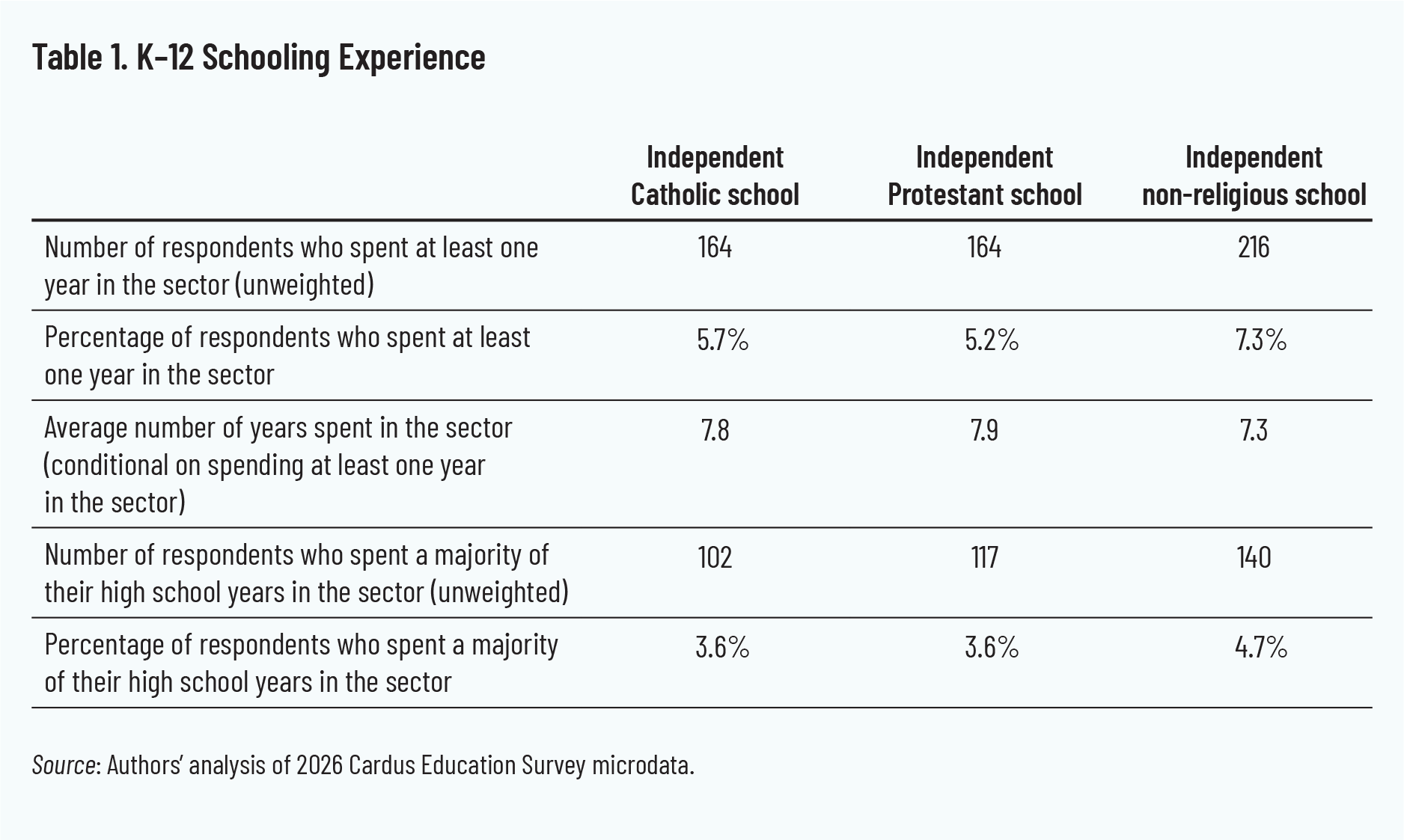
This report focuses on respondents who primarily attended independent non-religious, independent Catholic, and independent Protestant schools. The first column of table 1 lists the number of respondents in the sample who spent at least one year of their primary and secondary schooling in each of these. For instance, 216 respondents attended an independent non-religious school for at least one year of their primary and secondary education, which amounts to about 7 percent of the survey sample (and is reflective of the overall population in Canada that attended this type of school). Respondents who spent at least one year in an independent non-religious school ultimately spent about seven years in that type of school, on average. Meanwhile, about 5 percent of respondents spent at least one year in independent Catholic or Protestant schools, and those respondents spent an average of nearly eight years in that respective type of school.
For the purposes of this report, respondents were grouped as follows: independent non-religious school graduates, independent Catholic school graduates, independent Protestant school graduates, and public school graduates. (Public school graduates are those from language-majority public schools, language-minority public schools, and Catholic public schools.) As in prior iterations of the CES, respondents were grouped based on the type of school in which they spent a majority of their high school years. 17 17 Respondents in all provinces indicated the type that they attended grades 9 through 12. If respondents attended the same type for three or four years (a clear majority of that time) they are categorized as being attendees of that one. Further categorization is explained in depth in DeJong VanHof et al., “The Difference a School Makes.” Only thirty-four respondents were grouped into the “other religious” independent school type, and only thirty-five respondents were in the homeschool sector. Unlike for the other groups, sample sizes are not large enough for these two to meaningfully examine how each contributes to the common good, so results for these respondents are not further explored in this report.
Presentation of Results
For all figures presented in this report, respondents who spent the bulk of their high school years in any kind of public school (including language-majority, language-minority, and Catholic) are compared to respondents who spent the bulk of their high school years in an independent school (Catholic, Protestant, and non-religious). 18 18 For the questions that specifically asked respondents about their experiences in high school, the following instructions were provided: “If you attended more than one high school, please consider the high school that you attended longest.” The average outcome for public school respondents serves as the baseline and is set at zero.
For all figures, only the school-effect scores are presented. These scores isolate the effect that each school type had on its graduates, by controlling for other variables that might also influence outcomes. These results are obtained by using linear regression techniques to account for the following demographic differences: respondent’s age, gender, religion, 19 19 Respondents were asked, “What was the primary religious identity that you were raised in, if any?” Those who selected the response option “atheist” or “no religion” were considered raised in a non-religious household. childhood socioeconomic status, 20 20 Controls for socioeconomic status were: growing up in a two-parent home, having a mother with an undergraduate degree, and growing up in poverty. Respondents were asked, “Growing up, what was the money situation at your home like?” Respondents who selected the response options “We didn’t have enough money for bills and food,” “We could pay some of our bills and food,” or “We could pay most of our bills and food” were considered as growing up in poverty. Respondents who selected “We paid all of our bills, but didn’t have enough for much more” or “We had plenty of money for our bills and other things we needed” were considered as not growing up in poverty. and province.
These regression models essentially account for the influence that the home and other formative life experiences potentially had on respondents, so that any observed differences between respondents across the school types are more reflective of the school’s contribution to those outcomes. This set of results assumes that influences outside of school type have been adequately accounted for in the demographic variables included in the models. While this cannot be guaranteed, the CES follows industry standards in accounting for these variables as much as is methodologically possible. Though we recorded the statistical significance of results in the main report, we refrain from making any claims about statistical significance in this report due to small sample sizes.
Finally, many of the outcomes are measures obtained from Likert-type items, with some items having up to seven response options. Presenting the percentage of respondents from each school type that selected each response option would result in an excessive amount of information and obscure the general picture that the data are revealing. To maximize clarity in the communication of results, response options are grouped together, and the percentage of respondents in each school type that selected a response option from that group of response options is presented. 21 21 Three guiding principles were used in grouping responses. First, where response options flip meaning (for example, in the case of Likert items that have the response options “strongly disagree,” “disagree,” “slightly disagree,” “slightly agree,” “agree,” and “strongly agree”), the responses that expressed agreement were grouped separately from the ones that expressed disagreement. Second, where items were adopted from other research studies, results are presented in the same way as in those studies, unless otherwise noted. And third, in some cases very few respondents selected particular response options, so a grouping decision was made in order to limit the amount of measurement error in the results and maximize the validity and precision of the results. The way that response options are grouped for a particular outcome is noted in each figure.
Perceptions of High School
The CES measures graduates’ perceptions of their high school experiences across a range of dimensions: the overall quality of the education they received, how well their schools prepared them for life after graduation, the quality of school relationships, and how their schools handled challenging topics. This section of the report unpacks the findings relative to graduates’ perceptions of high school experiences, by school type. As noted earlier, for all figures presented in this report, the average level of an outcome for respondents from all public schools serves as the baseline and is set at zero.
Overall Experience and Quality
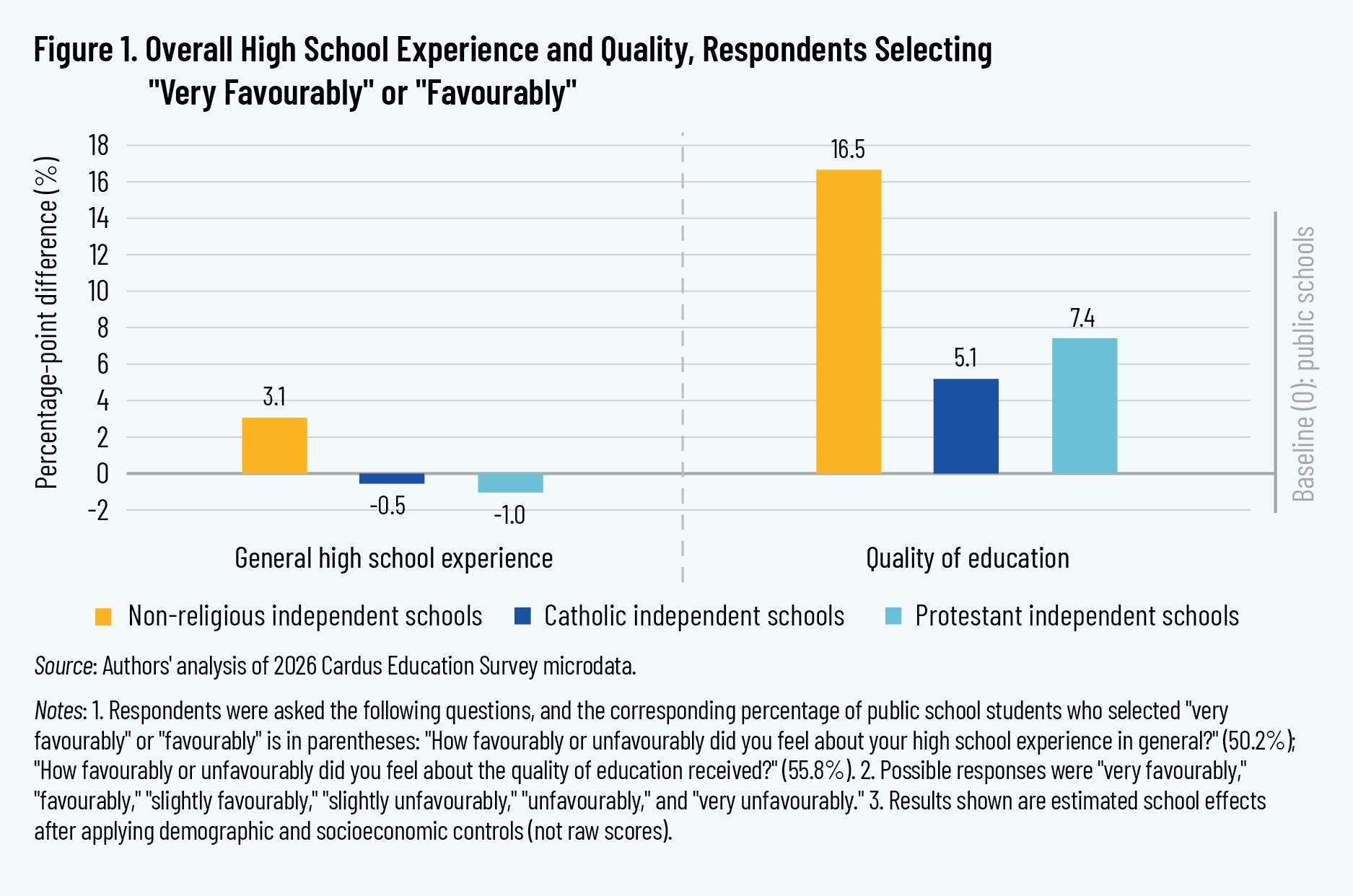
Two items assessed respondents’ perceptions of the overall experience and quality of their high school education. The first item asked them to indicate how favourably they felt about their overall high school experience. Only slight differences were found between school types on this response, with graduates of independent non-religious schools rating their overall high school experience slightly higher, on average. For the second question asked in this section, in which respondents reported how favourably they felt about the quality of the education they received, there was a notable, positive difference between graduates of independent schools and their public school counterparts. The largest positive difference was observed for independent non-religious school graduates, followed by independent Protestant school graduates and then independent Catholic school graduates (figure 1).
The CES asked respondents to rate the quality of the extracurricular opportunities at their school. While 48.1 percent of public school graduates rated their extracurricular opportunities favourably or very favourably, independent Catholic school graduates and independent non-religious school graduates were more likely to do so, by 10.9 and 7 percentage points, respectively. Independent Protestant school graduates rated the quality of the extracurricular opportunities at their school at a similar level to their public school counterparts.
Preparation for Life
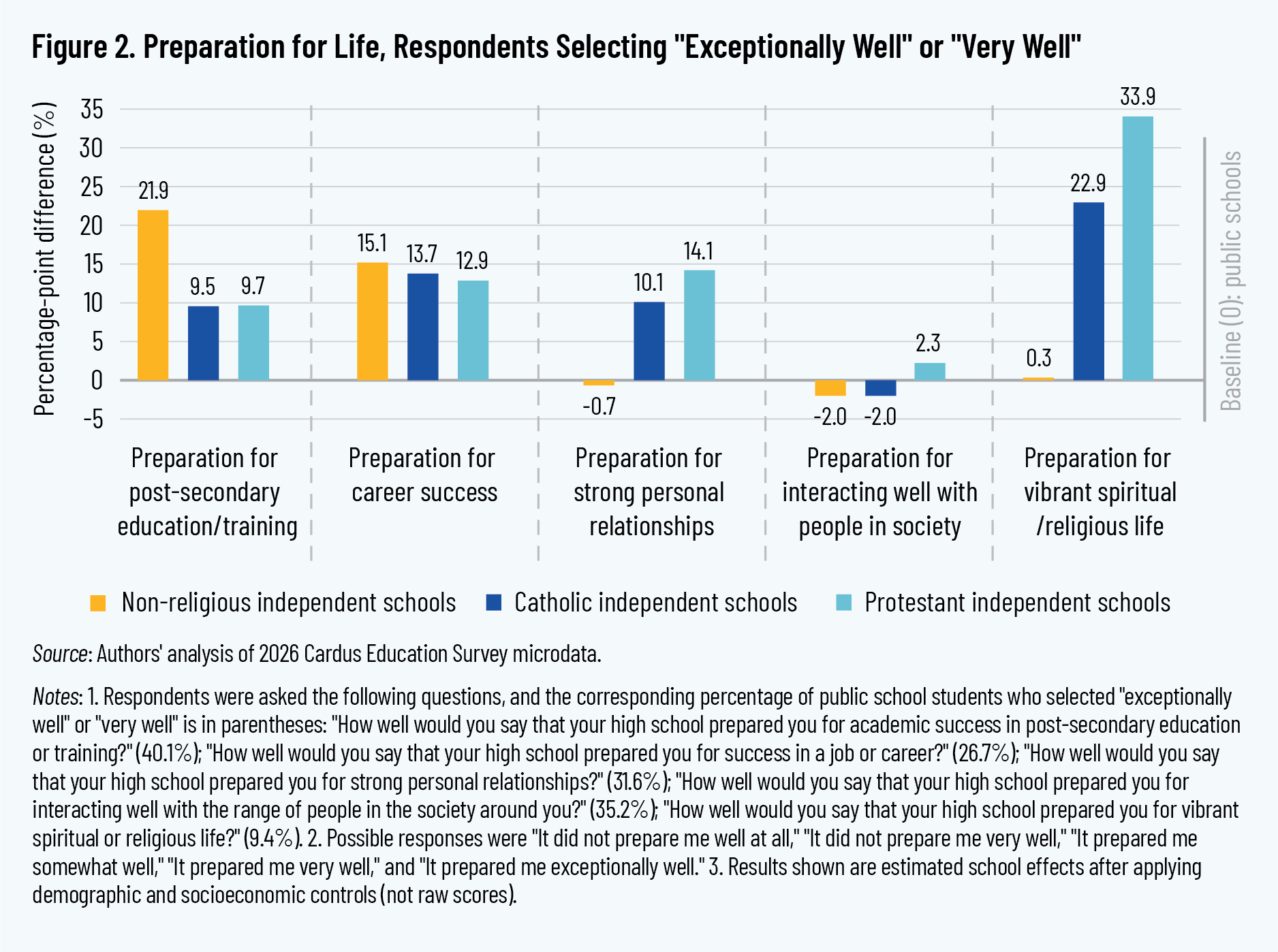
The CES asked respondents to rate how well their high schools prepared them for life. This included how well their high schools prepared them for academic success in post-secondary education or training, for which graduates of all independent school types were more likely to rate their schools as preparing them “very well” or “exceptionally well,” as compared with public school graduates; the largest positive difference was observed for independent non-religious school graduates. A similar pattern was observed when it came to rating their preparation for career success, though the differences between types of independent school graduates was less pronounced. For preparation for strong personal relationships, graduates of independent Catholic and Protestant schools were more likely to provide a positive rating, and independent non-religious school graduates did not differ much from public school graduates (figure 2).
When it came to how graduates felt about how well their schools prepared them for interacting well with the range of people in society around them, there were not substantial differences observed between graduates of public schools and those of independent schools. However, in terms of preparation for a vibrant spiritual or religious life, there was a clear and large difference for independent Protestant school graduates, who were 33.9 percentage points more likely than public school graduates to respond that they were prepared in this area “very well” or “exceptionally well.” Graduates of independent Catholic schools followed, at 22.9 percentage points. This was the preparation area with the largest difference observed between independent religious school graduates and all other graduates (figure 2).
School Relationships
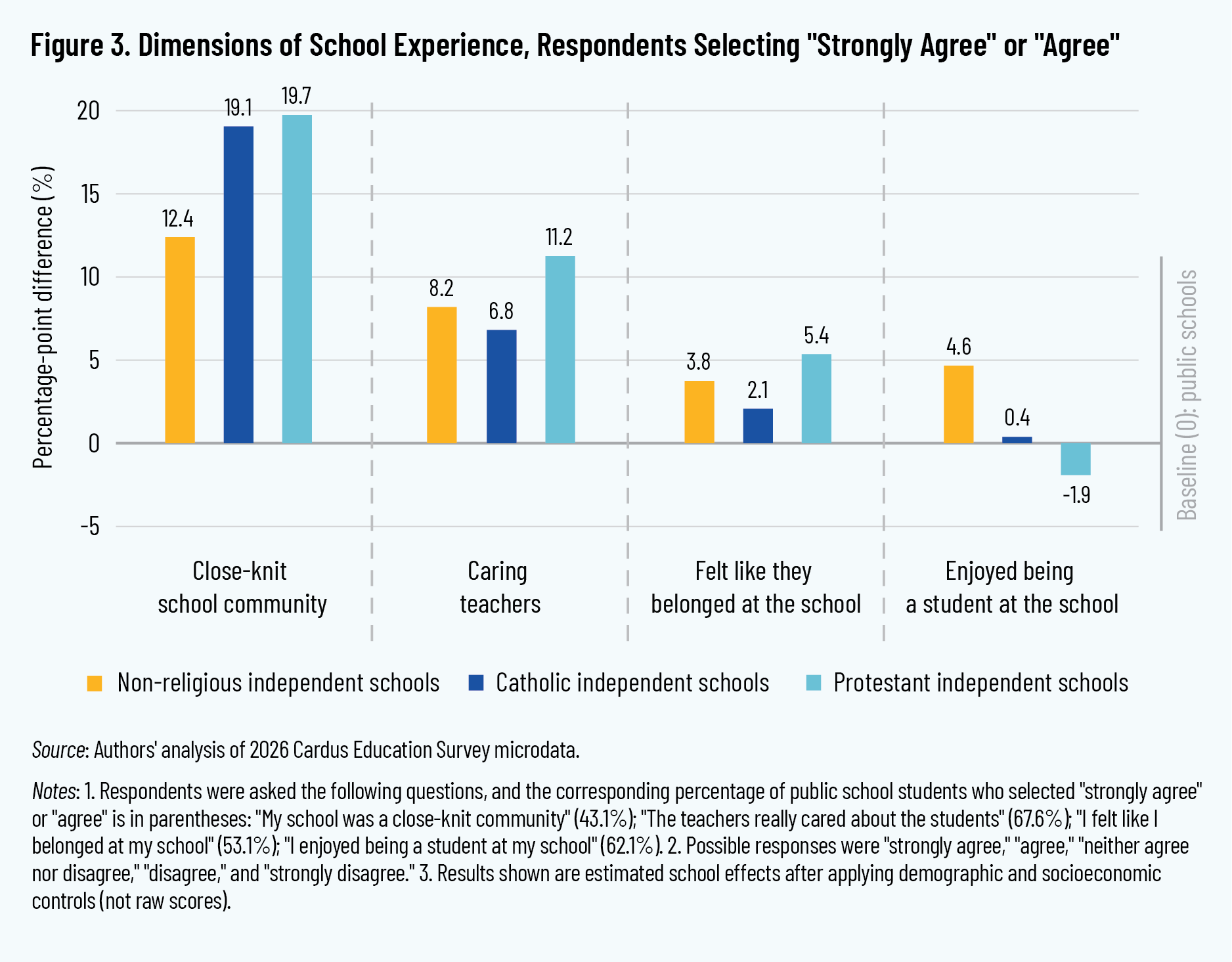
The CES asked respondents to characterize the level of social connectedness found in their high schools. For the items “My school was a close-knit community” and “The teachers really cared about the students,” graduates of independent Protestant schools were more likely to agree or strongly agree with these statements as compared with counterparts from other school types, though all independent school graduates indexed above their public school peers. When it came to the statements “I enjoyed being a student at my school” and “I felt like I belonged at my school,” graduates of all independent school types did not differ substantially from public school graduates (figure 3).
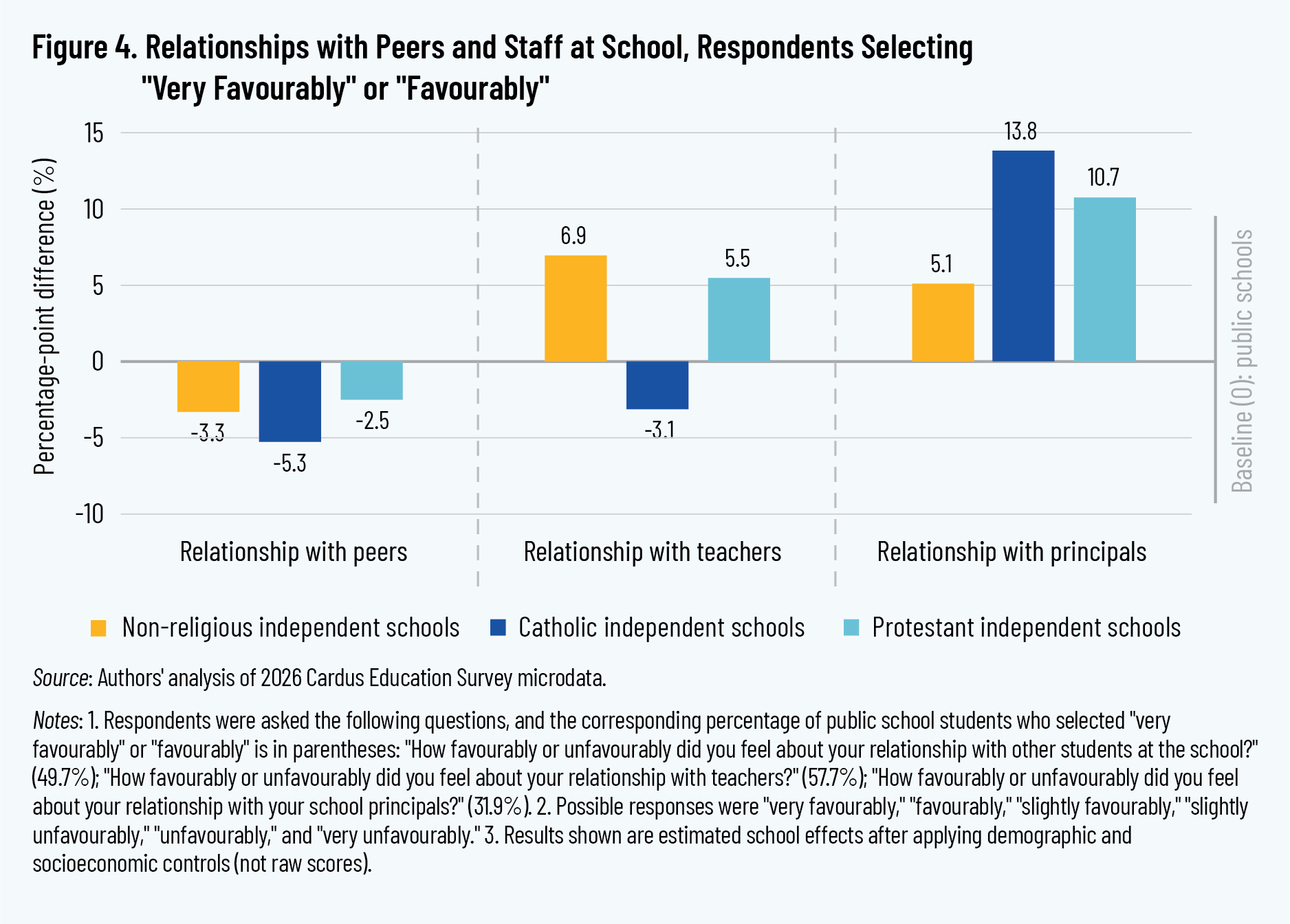
The CES also asked respondents to rate their relationships with others at their school, including peers, teachers, and principals (figure 4). Results for these items were mixed, with the clearest differences appearing in respondents’ relationships with school principals. Here, graduates of all three independent school types rated their relationships more favourably on average than did their public school counterparts. When it came to relationships with other students at the school, graduates of all three independent school types did not differ substantially from each other or from public school graduates, though independent school graduates as a whole had slightly lower ratings than public school graduates. In terms of their relationships with teachers, graduates of independent non-religious schools and independent Protestant schools were more likely to report favourable or very favourable relationships than were graduates of public schools or independent Catholic schools (who themselves were slightly less likely to give a favourable rating than all other types).
Challenging Topics
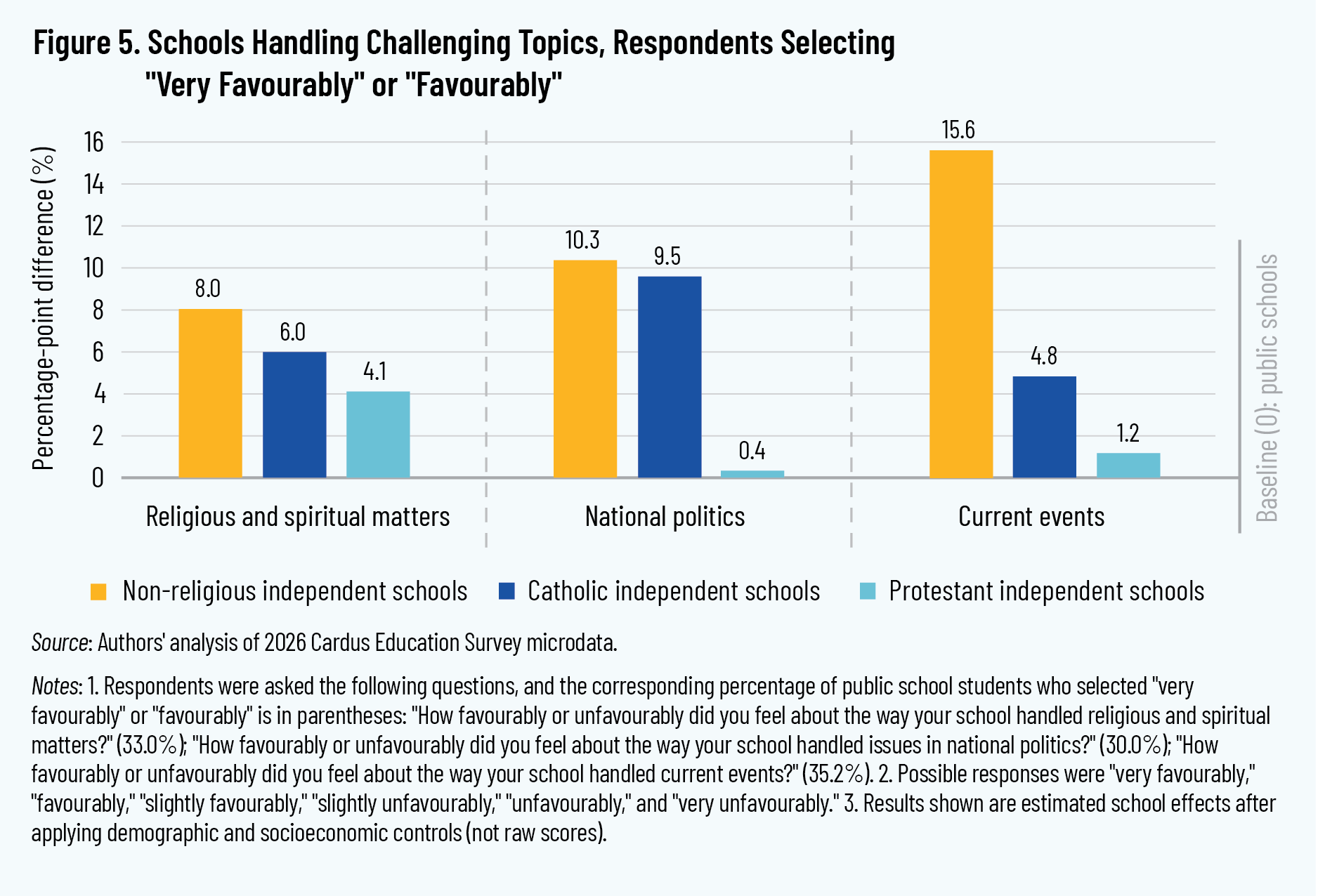
Respondents also rated how well they thought their school handled challenging topics in the areas of religious and spiritual matters, national politics, and current events. A clear pattern emerged across all three topics. Graduates of all independent school types indexed higher than their public school counterparts for how well their schools handled these issues, with the highest scores reported by graduates of independent non-religious schools, followed by independent Catholic schools and then independent Protestant schools (figure 5).
Educational Attainment and Employment Outcomes
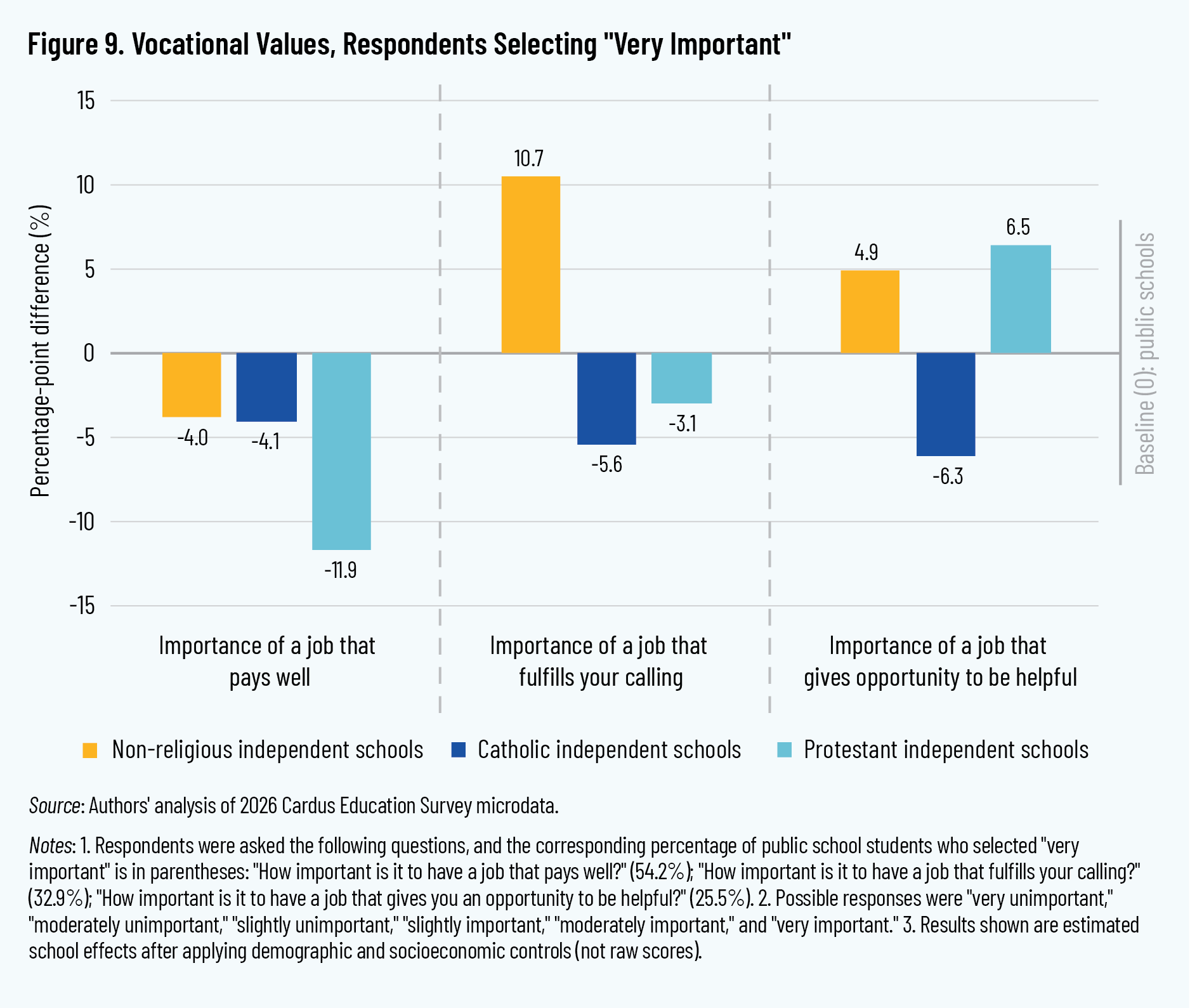
Post-secondary degree attainment and economic outcomes are typical measures of the quality of K–12 education. The CES measures educational attainment, income, and employment outcomes of graduates. Interestingly, independent school graduates were least likely to say that having a job that pays well is very important to them, as compared with graduates of public schools.
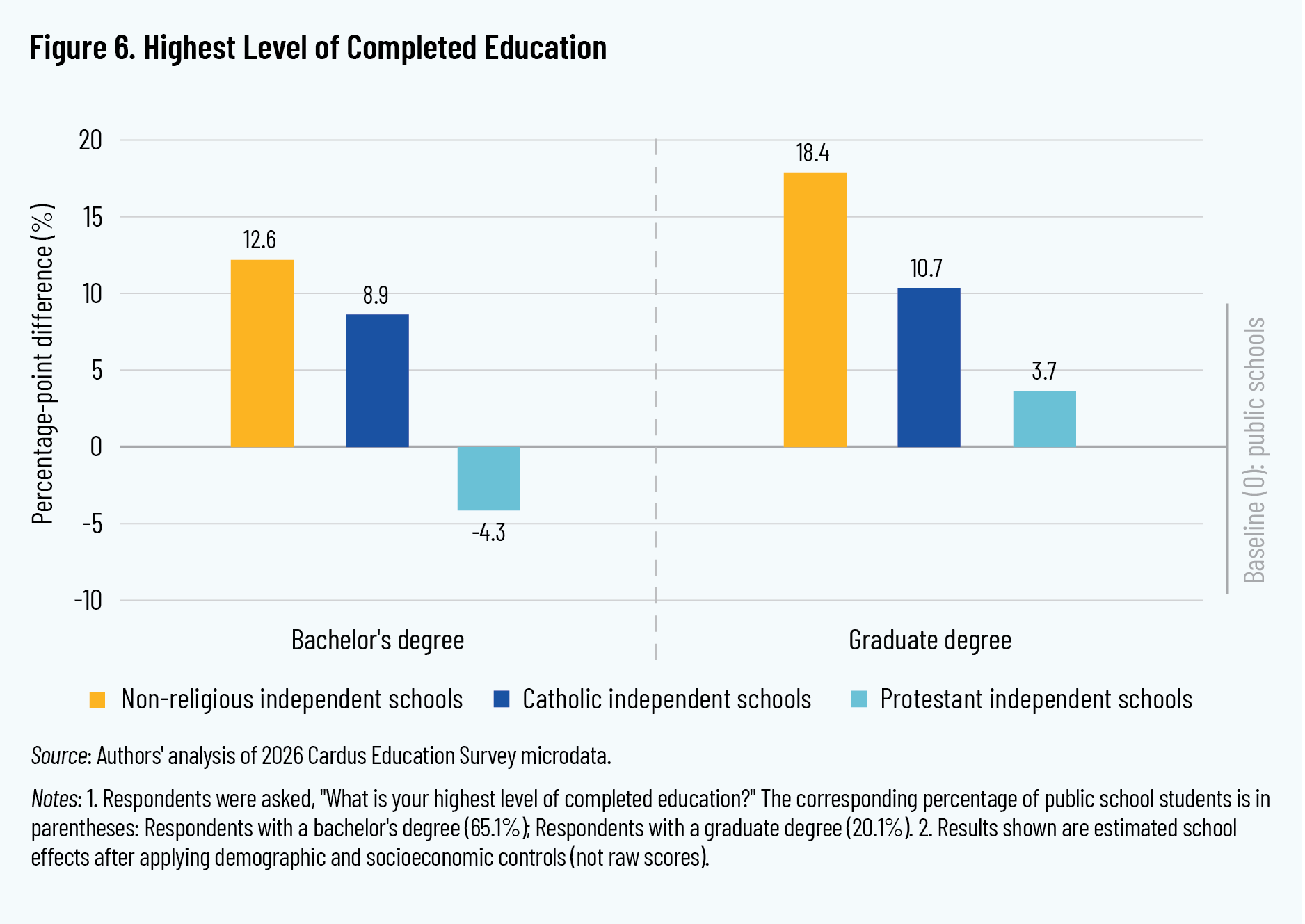
In terms of attaining bachelor’s or graduate degrees, independent non-religious school graduates outperformed all other school types. Independent Catholic school graduates reported the next highest rate of degree attainment. Independent Protestant school graduates did not differ much from their public school counterparts, but while being slightly less likely to obtain a bachelor’s degree, those who did so were more likely to obtain a graduate degree, compared to public school graduates (figure 6).
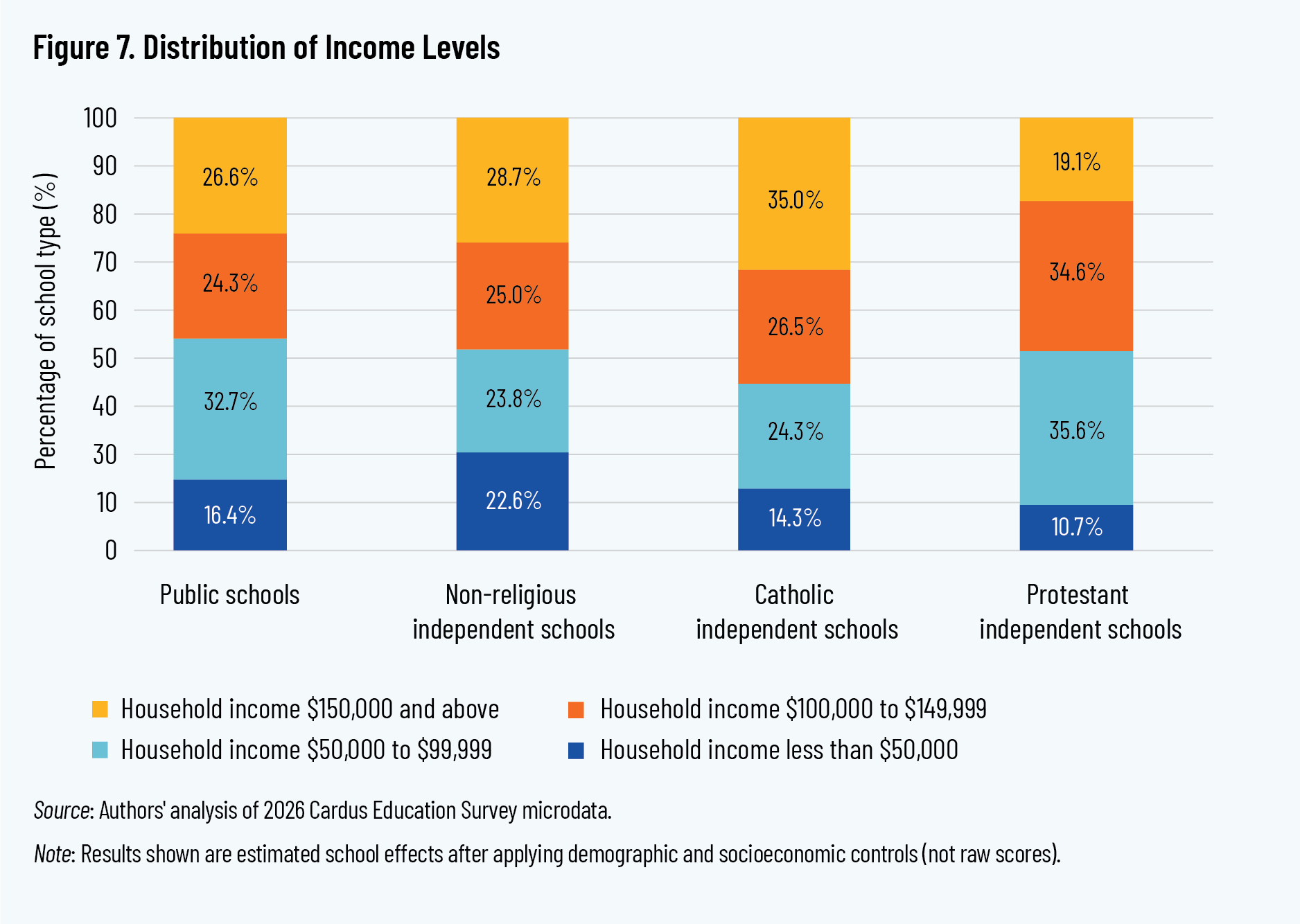
The greater levels of educational attainment among respondents from independent non-religious and independent Catholic schools correlate with greater household incomes. School-effect estimates are shown in figure 7 (with income broken into four brackets: less than $50,000, $50,000 to $99,999, $100,000 to $149,999, and $150,000 and above). If we combine the lower two income brackets, respondents from independent non-religious and independent Catholic schools are more likely to be in the upper two income brackets compared to other respondents. Meanwhile, respondents from independent Protestant schools and from public schools are less likely to be at the extreme ends of the income distribution. They are more likely to be in the middle two income brackets compared to respondents from the other school types (figure 7).
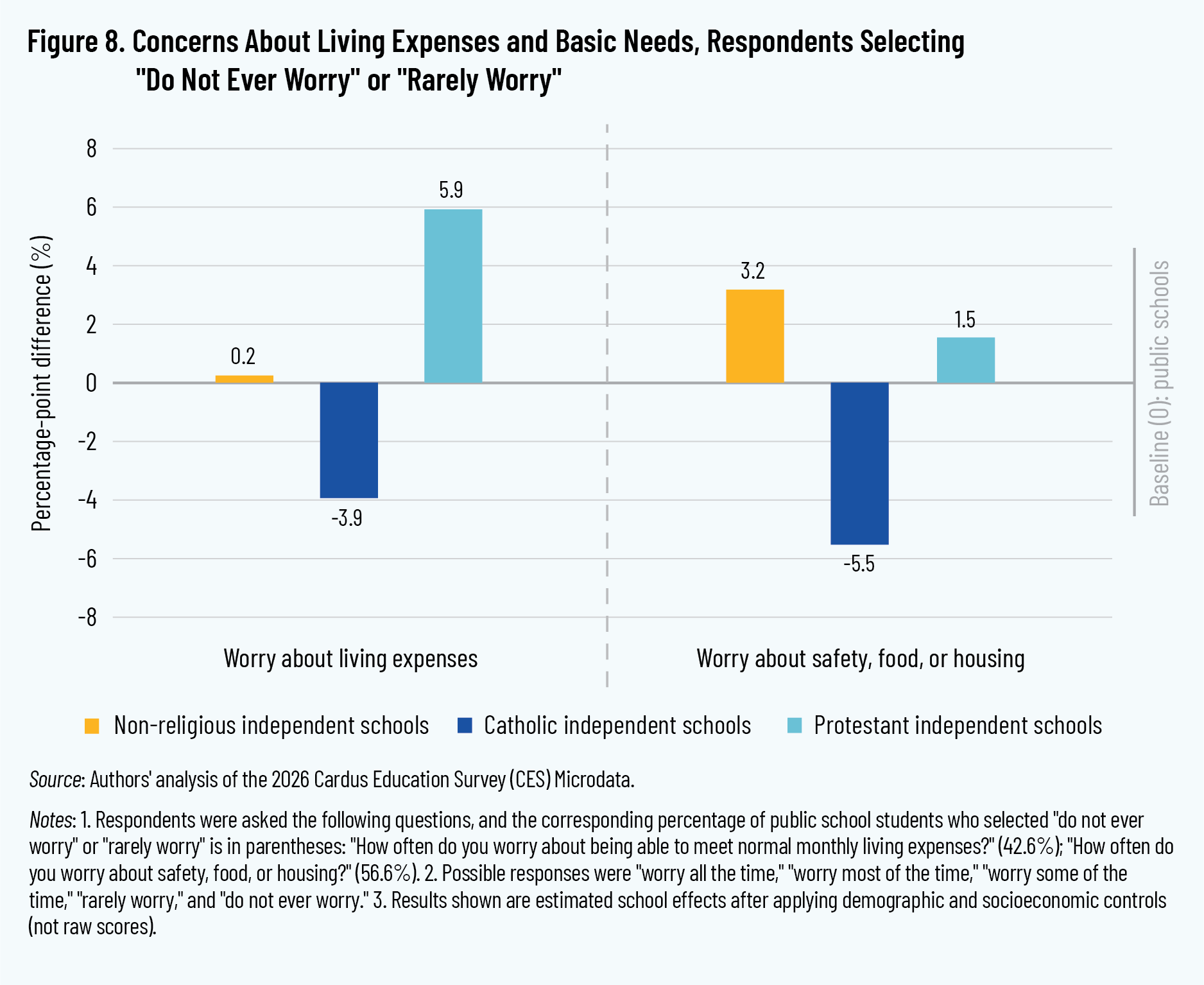
In addition to income levels, the CES incorporated questions from the Flourishing Measure, a validated instrument developed by the Human Flourishing Program at Harvard University. 22 22 VanderWeele, “On the Promotion of Human Flourishing.” The wording of items adopted from the Flourishing Measure are presented verbatim in the CES. However, the Flourishing Measure asked respondents to provide a numerical rating on a scale of 1 through 10, while the CES followed the recommendation of psychometricians and added response anchors. Psychometricians have pointed out that the implicit meaning of numbers is less clear than verbal statements, resulting in lower levels of reliability in measures based on the former approach compared to measures based on the latter approach. The instrument includes two questions that gauge respondents’ self-reported levels of anxiety when it comes to financial and material stability. 23 23 Results for other questions taken from this instrument are presented below, in the section titled “Measures of Flourishing.” After controlling for background demographic characteristics, graduates of independent Protestant schools were the most likely to say they rarely or never worry about being able to meet monthly living expenses, while independent non-religious school graduates were the least likely to worry about safety, food, or housing. Graduate of independent Catholic schools, however, were more likely to worry about both measures of financial and material stability (figure 8).
In addition to educational attainment and income, the CES presented respondents with various vocational values and asked them to rate how important each was to them, on a six-point Likert scale. These questions followed the approach of a Wall Street Journal/NORC poll conducted in 2023 and included the importance of having a job that pays well, that enables one to fulfill one’s calling, and that gives an opportunity to be helpful. 24 24 Wall Street Journal/NORC at the University of Chicago, “WSJ/NORC Poll March 2023.” Graduates of all independent school types were less likely than their public school peers to rate having a job that pays well as very important, and the difference was most pronounced for independent Protestant school graduates. Independent Protestant school graduates were more likely than those of all other school types to rate having a job that gives them an opportunity to be helpful as very important. Independent non-religious school graduates were most likely to rate having a job that fulfilled their calling as very important. Independent Catholic school graduates fell below the public school baseline on all three values (figure 9).
Civic Formation
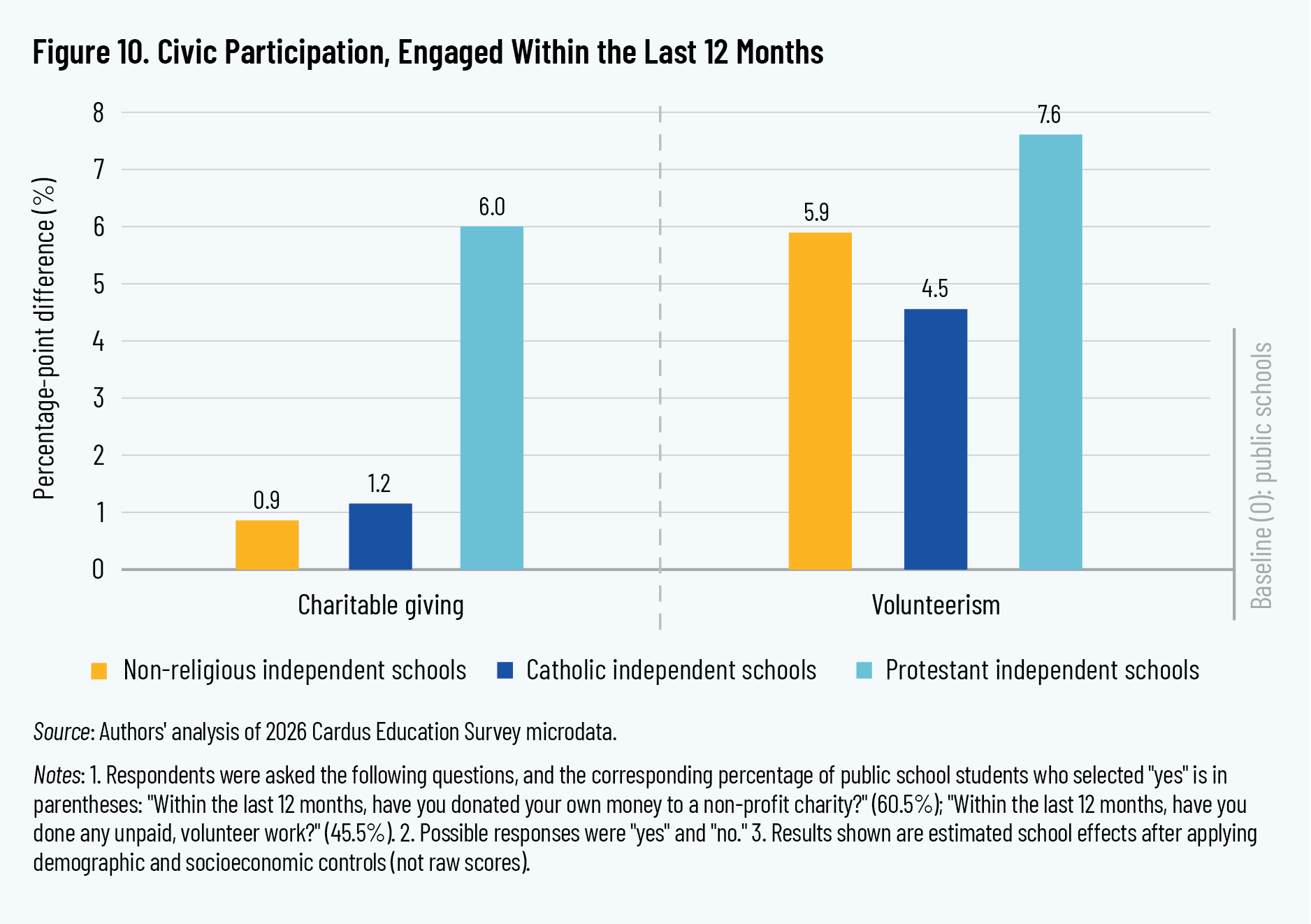
A key role of schooling in a democracy is to instill, nurture, or otherwise inculcate the dispositions and skills needed for living well together in a pluralistic society. In terms of outcomes, this is often referred to as civic formation. The CES inquires about civic behaviour—specifically, respondents’ engagement with two important civic practices: charitable giving and volunteering. Compared to all other school types, graduates of independent Protestant schools were more likely to say that they donate their money to a charity, and that they have done any unpaid, volunteer work, within the last twelve months. Graduates of independent non-religious and independent Catholic schools trailed slightly behind on volunteering but were similar to their public school counterparts on charitable giving (figure 10).
The CES provided a list of types of service organizations and asked respondents if they had volunteered with them in the past twelve months. This list included volunteering with a religious organization (other than one’s church or congregation), an environmental organization, a political organization, a neighbourhood organization, a social-service organization, and an arts, cultural, or sports organization. Graduates of independent non-religious and Protestant schools did not differ much from their public school counterparts on volunteering for any of these organizations. However, graduates of independent Catholic schools were much more likely to report volunteering with a neighbourhood organization, social-service organization, and religious organization (at 25.0, 23.6, and 17.3 percentage points, respectively, above their public school counterparts).
Measures of Flourishing
Growing attention is being paid to the role of schooling in student mental health and well-being, given the rise of youth mental health conditions both before and after the COVID-19 pandemic. The 2026 CES included items designed to measure aspects of graduates’ flourishing, drawn from the Flourishing Measure mentioned earlier in this report. These items asked for respondents’ self-reported levels of happiness and life satisfaction, mental and physical health, meaning and purpose, character and virtue, close social relationships, and financial and material stability.
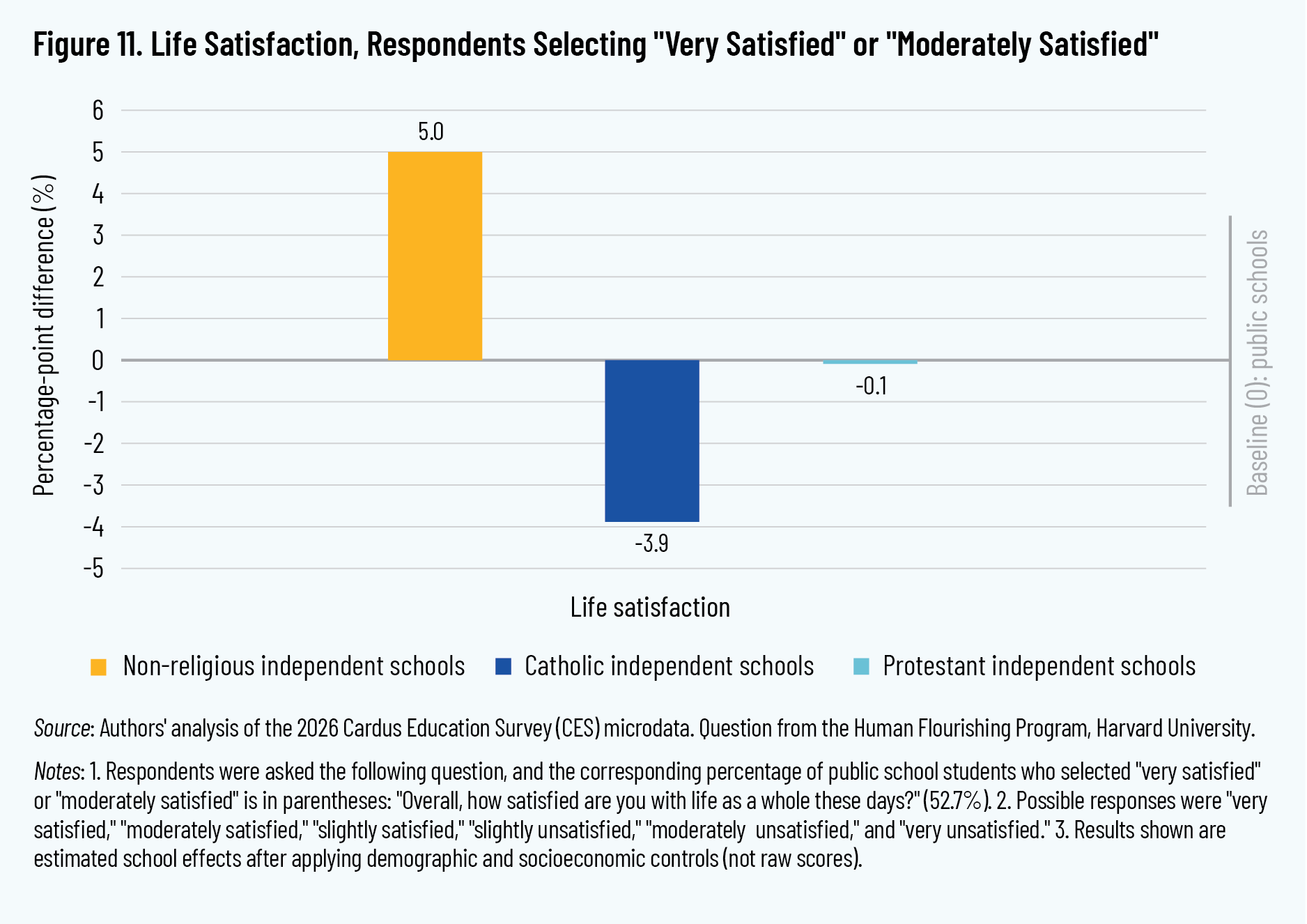
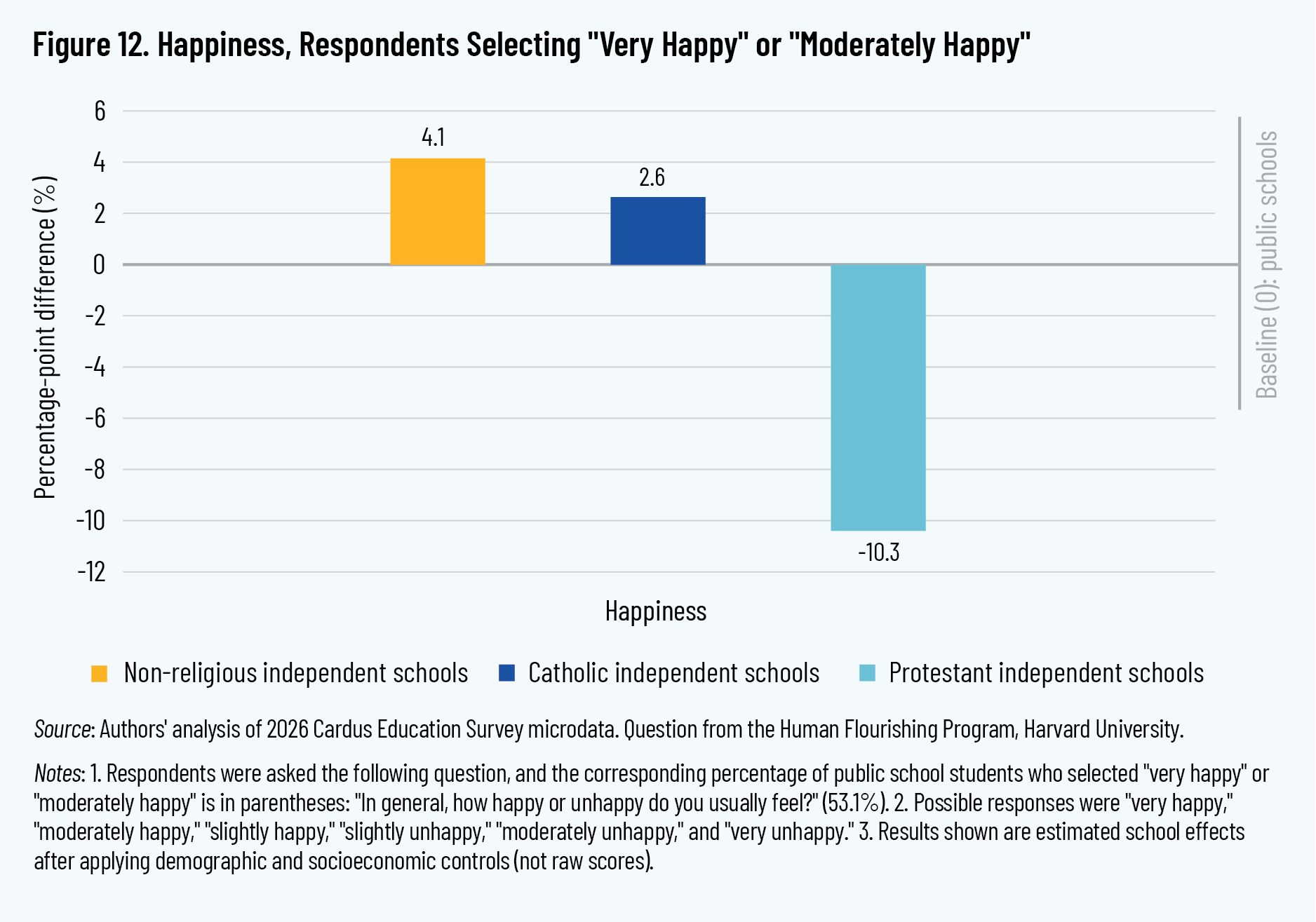
There were two questions relating to happiness and life satisfaction: “Overall, how satisfied are you with life as a whole these days?” and “In general, how happy or unhappy do you usually feel?” For both questions, a small advantage to graduates of independent non-religious schools was evident (5.0 and 4.1 percentage points, respectively) as compared with their public school counterparts. Graduates of independent Protestant schools were more than 10 percentage points less likely to describe themselves as “moderately happy” or “very happy.” Otherwise, results for these questions were close to the public school baseline (figures 11 and 12).
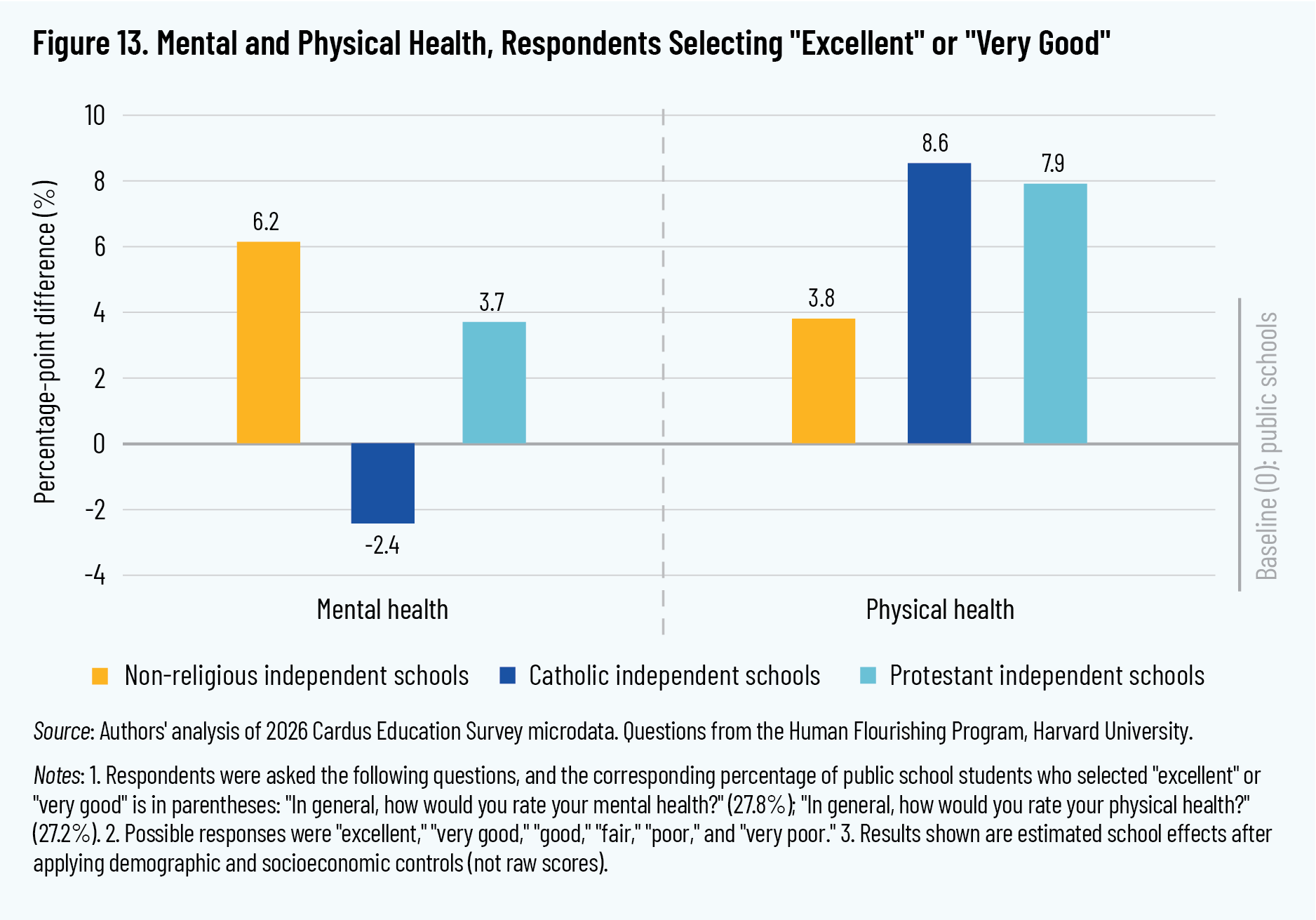
Additionally, there were two questions related to mental and physical health: “In general, how would you rate your mental health?” and “In general, how would you rate your physical health?” Graduates of independent Catholic schools rated their physical health more highly, on average, than those of other school types, though only slightly higher than those of independent Protestant schools. Graduates of independent non-religious schools rated their mental health more highly, on average, than graduates of all other school types (figure 13).
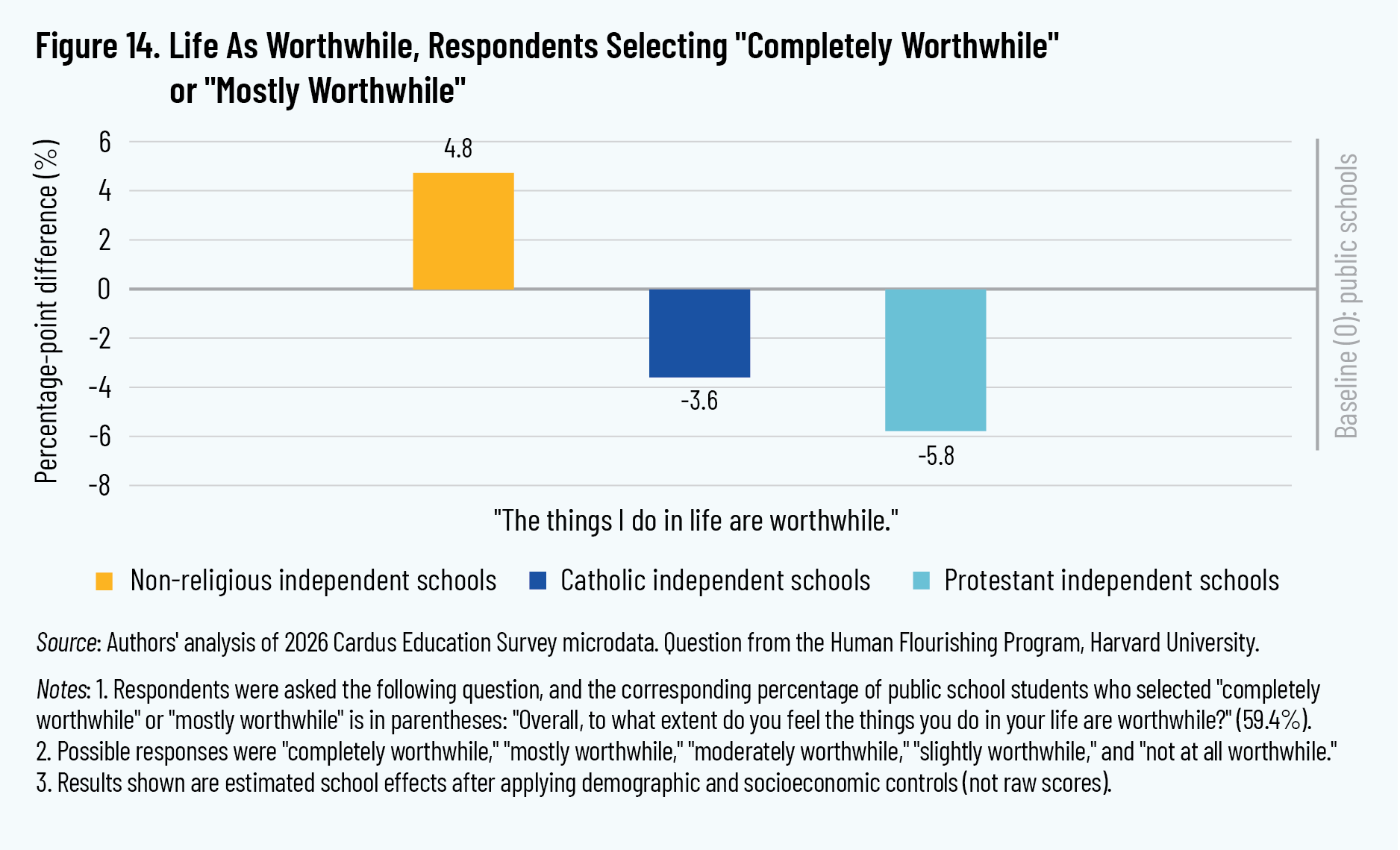
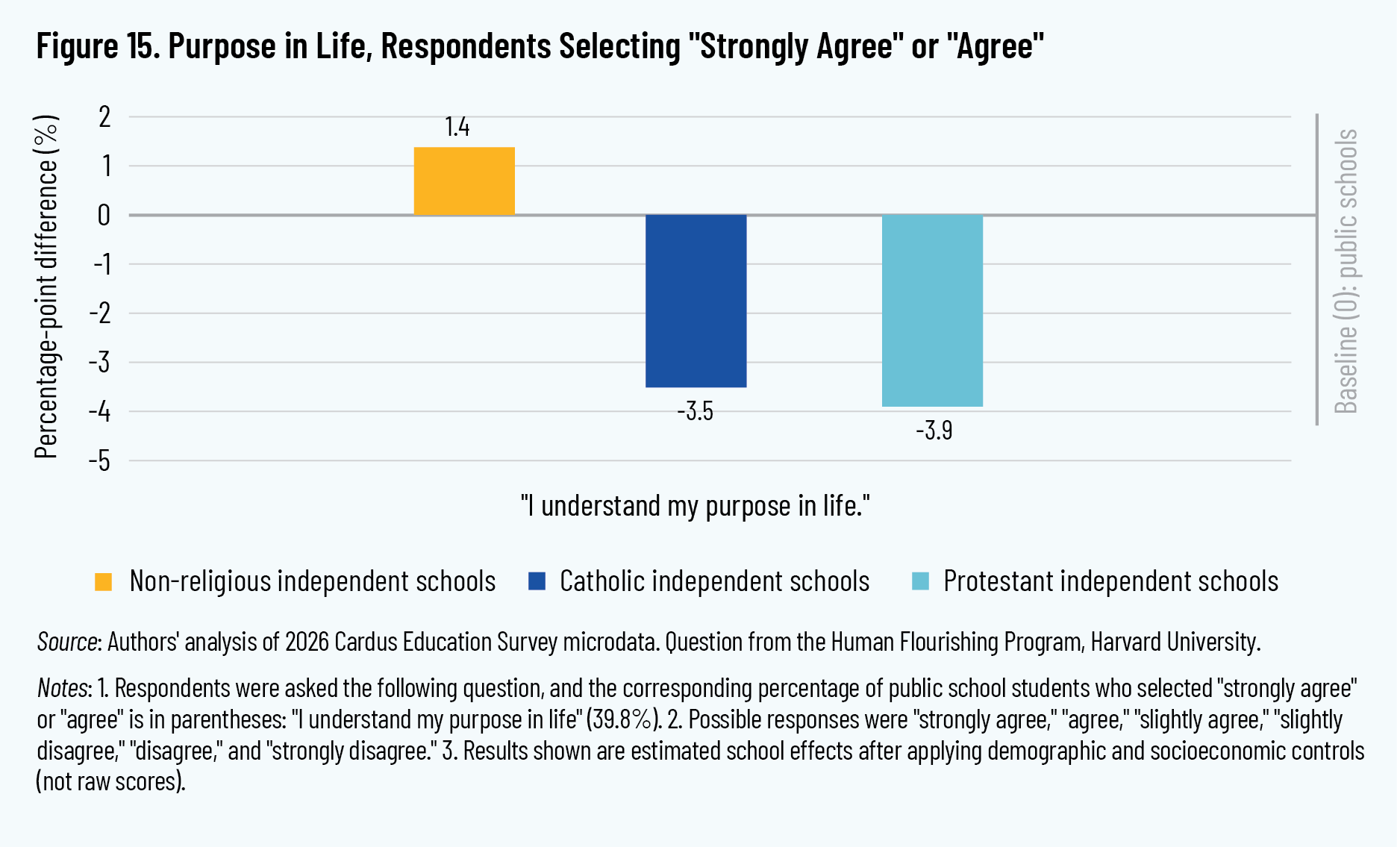
The CES also utilized the Flourishing Measure’s two questions related to meaning and purpose. The following question and statement were proposed: “Overall, to what extent do you feel the things you do in your life are worthwhile?” and “I understand my purpose in life.” For both items, graduates of independent non-religious schools rated themselves more highly on these items on average than those of other school types. Graduates of independent Catholic and Protestant schools gave lower ratings on both items, on average (figures 14 and 15).
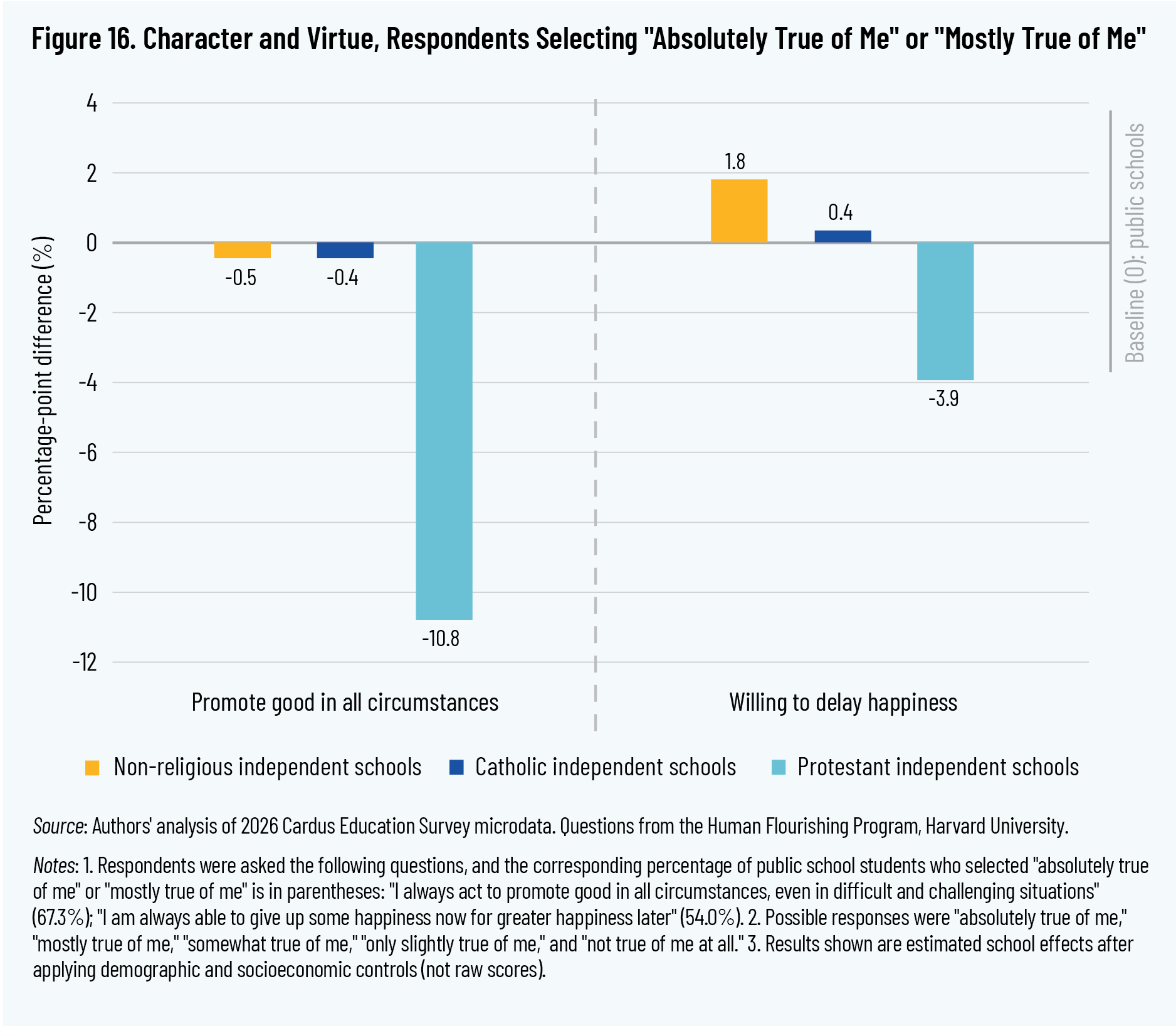
The CES posed the two Flourishing Measure statements related to character and virtue: “I always act to promote good in all circumstances, even in difficult and challenging situations” and “I am always able to give up some happiness now for greater happiness later.” For the first item, graduates of independent Catholic and non-religious schools were about as likely as public school graduates to say this was true for them, whereas independent Protestant school graduates were less likely. For the second, all school types were close to the public school baseline, with a slightly lower level of agreement found for graduates of independent Protestant schools (figure 16).
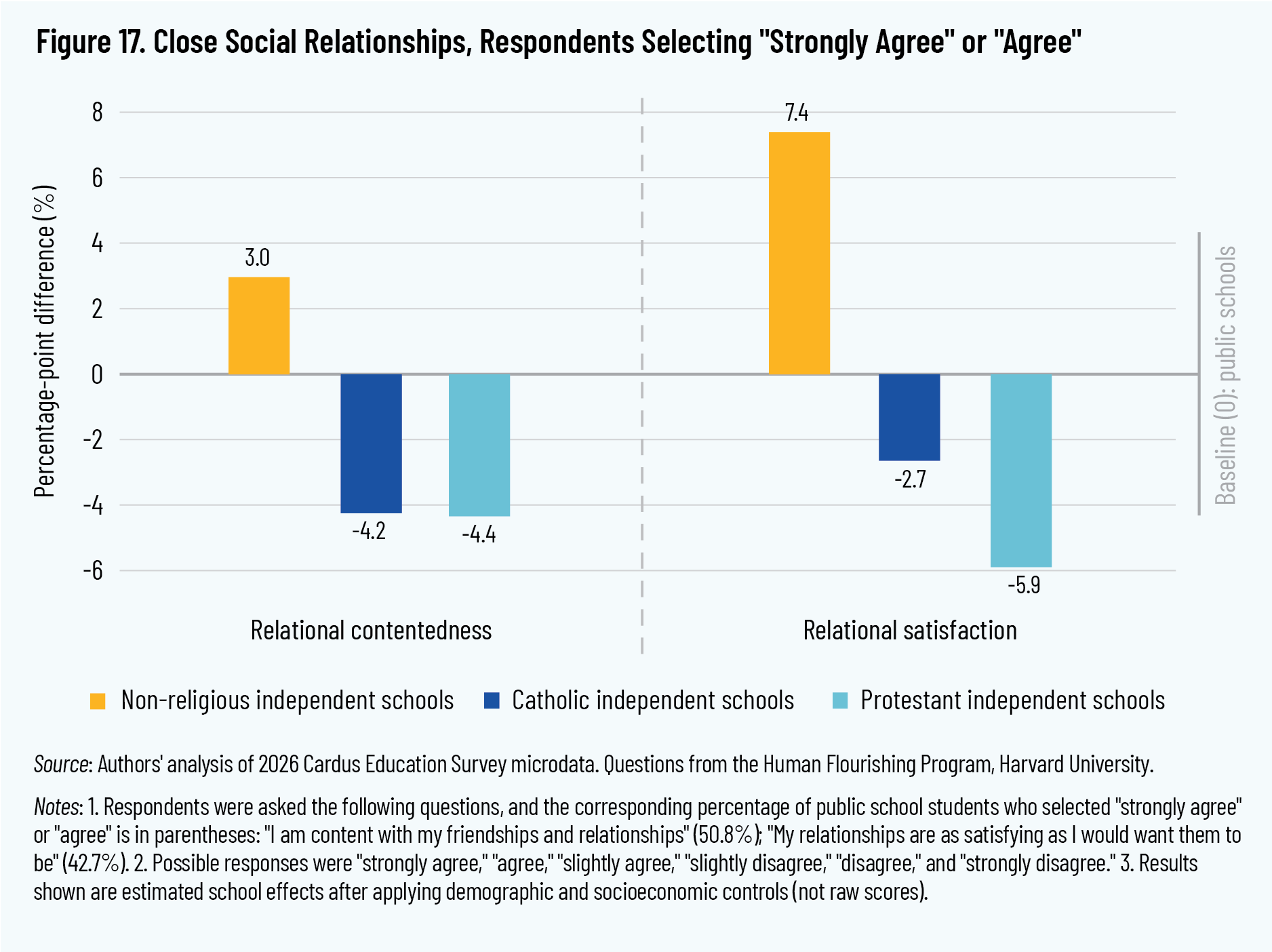
Close social relationships were examined through two statements: “I am content with my friendships and relationships” and “My relationships are as satisfying as I would want them to be.” For both items, independent non-religious school graduates provided higher ratings, on average, than their public school counterparts, while graduates of independent Catholic and Protestant schools provided lower ratings (figure 17).
Faith Formation
The CES measures religious belief, practice, and values as indicators of faith formation. Questions for this domain were adapted from the Spectrum of Spirituality Index developed by Cardus and the Angus Reid Institute. Consistent with previous administrations of the CES, faith formation is the domain in which the strongest evidence for school effects can be observed, with a clear benefit to respondents who graduated from independent Protestant schools. 25 25 Swaner et al., “School-Sector Influence.” The remainder of this section explores the CES findings relative to faith formation for each type of independent school.
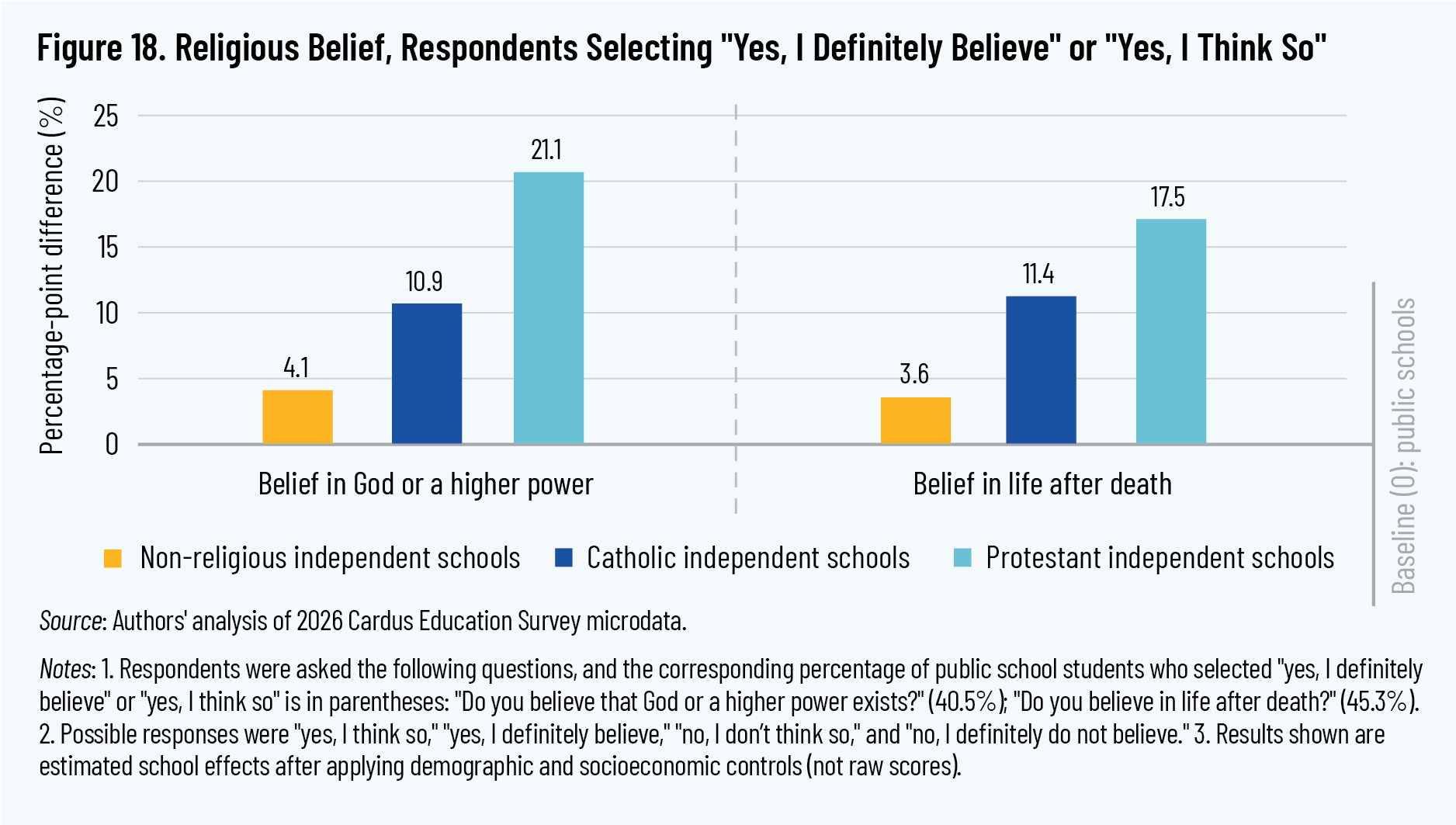
When asked whether they believe “that God or a higher power exists,” graduates of independent Protestant schools were more likely to say “Yes, I think so” or “Yes, I definitely believe” than were graduates of all other school types, followed by graduates of independent Catholic schools. Graduates of independent non-religious schools did not differ substantially from their public school counterparts. A similar pattern was observed when respondents were asked about whether they believe in life after death (figure 18).
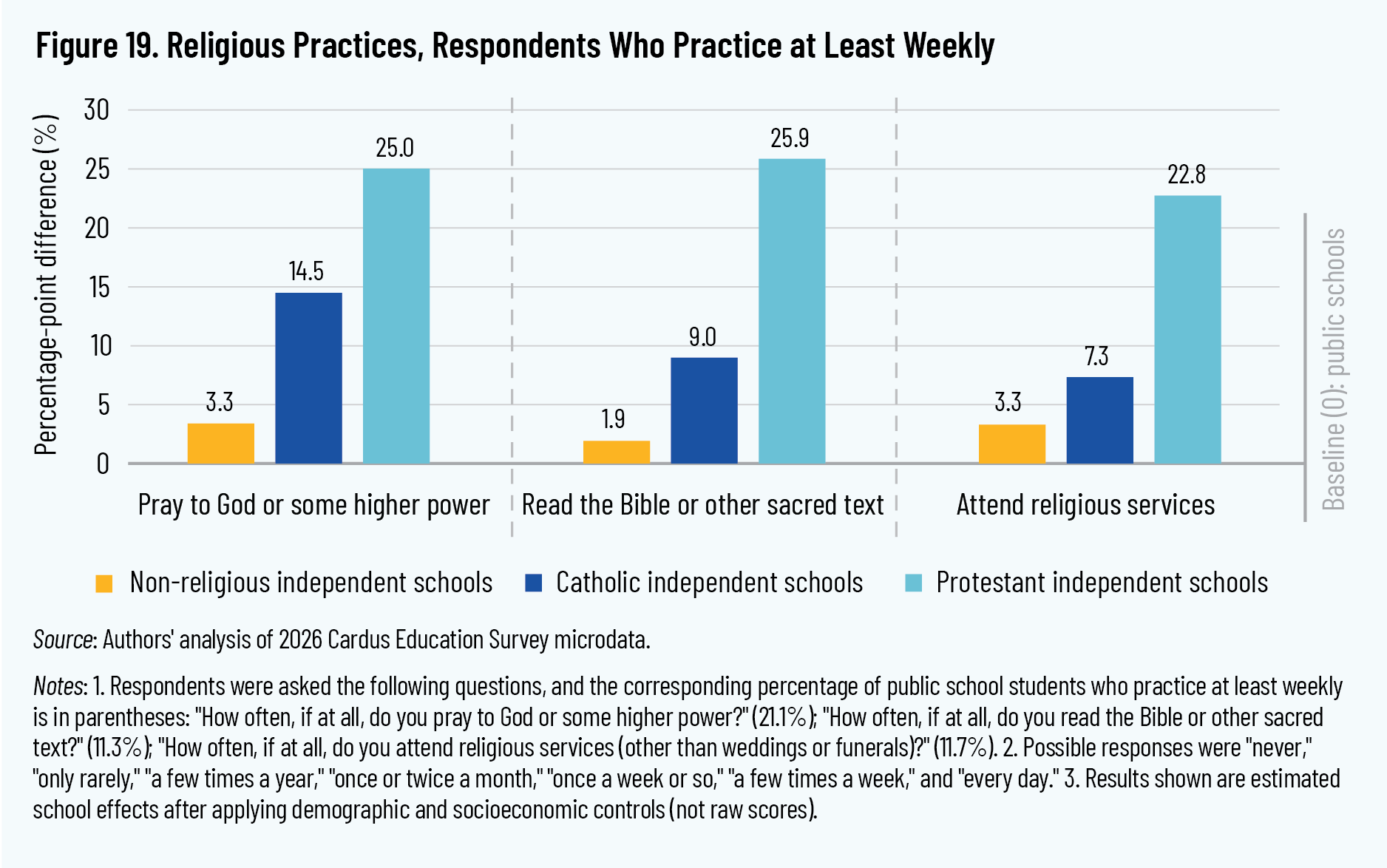
Like differences regarding religious belief, differences regarding religious practice are quite apparent and follow the same pattern. When asked how often they pray to God or a higher power, read the Bible or other sacred text, and attend religious services (other than weddings or funerals), graduates of independent Protestant schools reported a greater likelihood of doing each at least weekly compared to all other school types. Independent Catholic school graduates again followed independent Protestant school graduates in terms of weekly practice for each (figure 19).
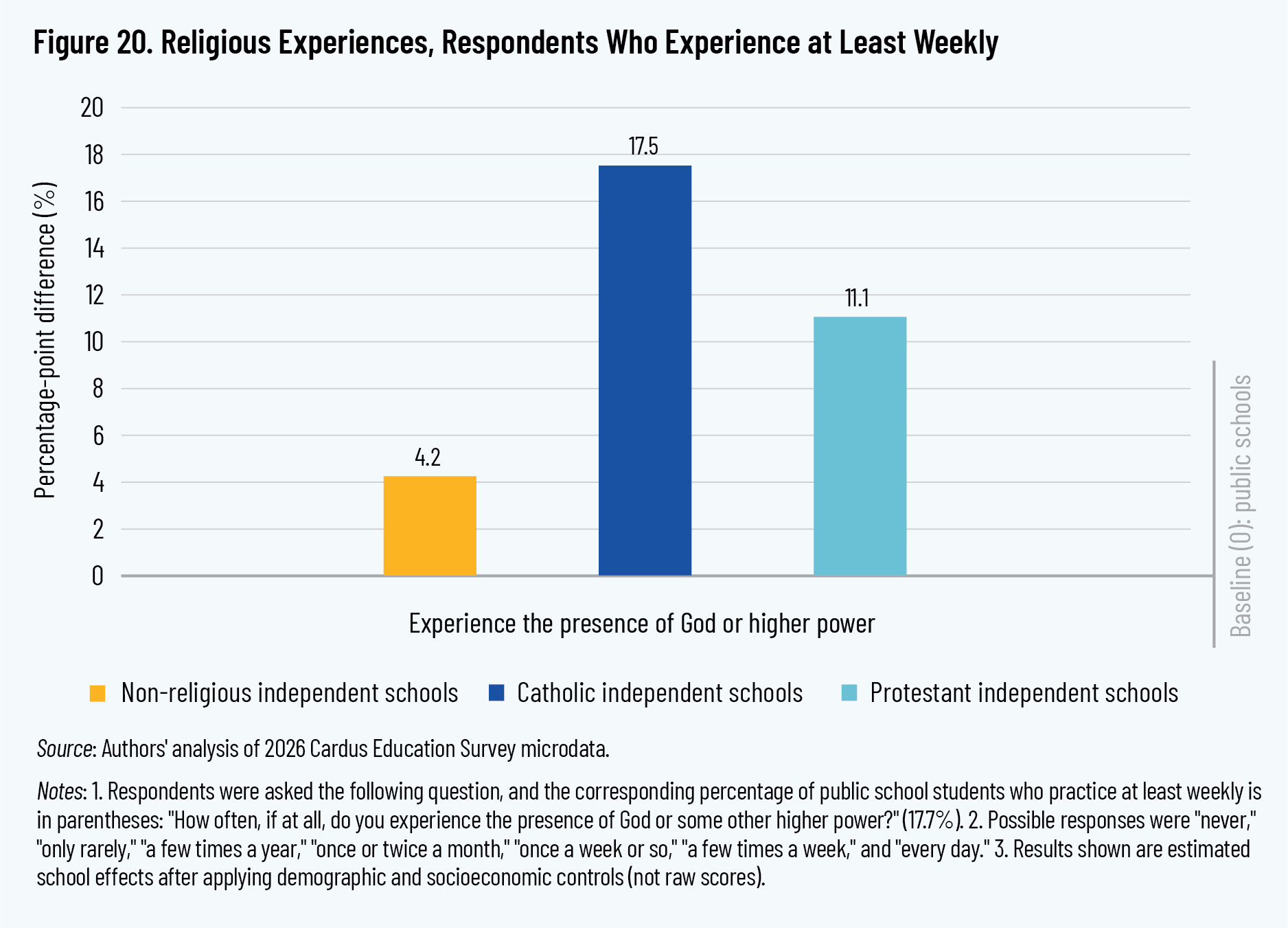
Given the findings for religious practice, it is perhaps unsurprising to also find that graduates of independent Catholic and Protestant schools were much more likely than graduates of the other school types to report feeling God’s presence on at least a weekly basis. However, graduates of independent Catholic schools were about 6 percentage points more likely to report this than were their independent Protestant school counterparts (figure 20).
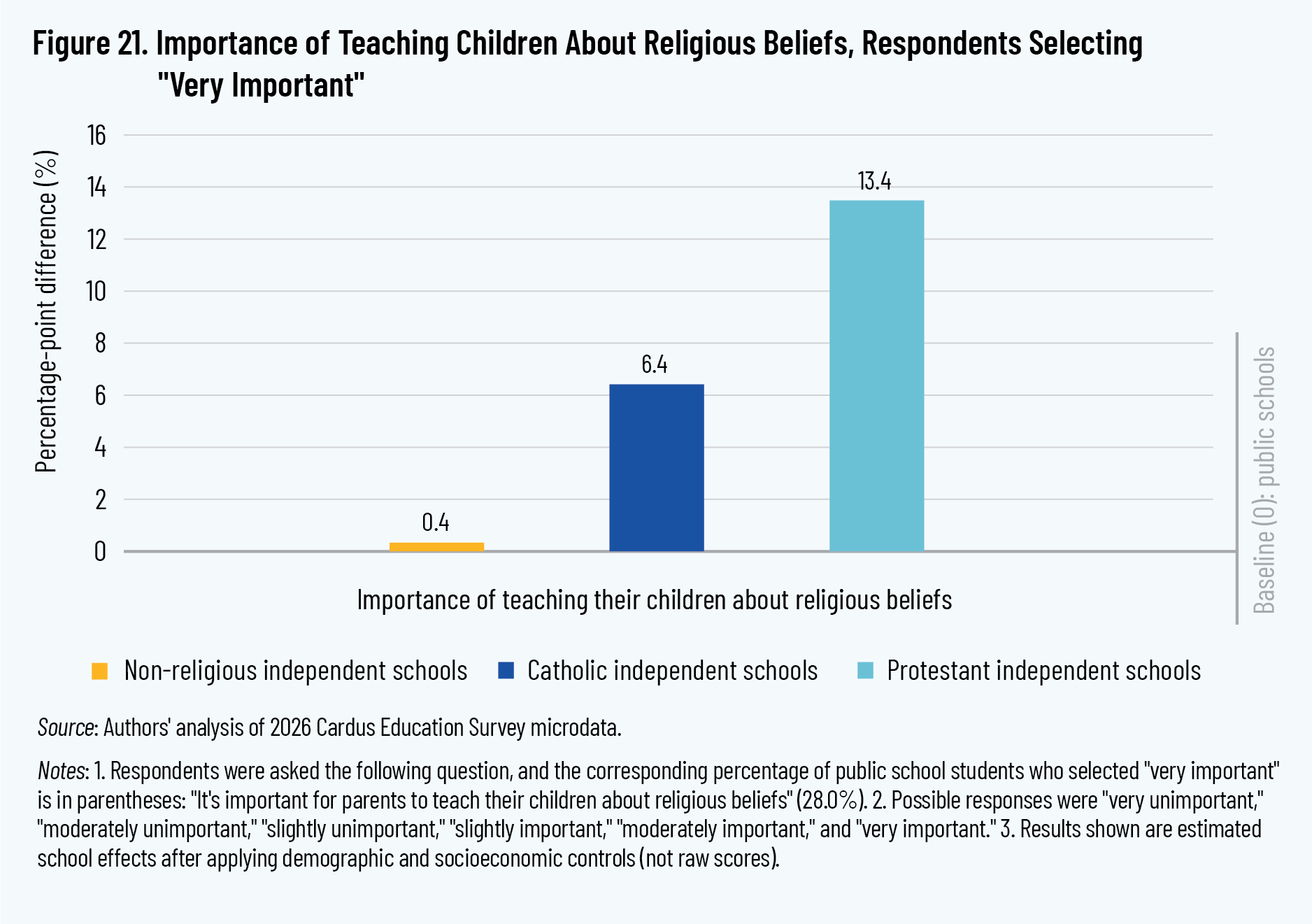
Respondents were also asked, using a six-point Likert scale, how important they thought it was for parents to teach their children about religious beliefs. Graduates of independent Protestant schools, followed by graduates of independent Catholic schools, were most likely to say it was very important (figure 21).
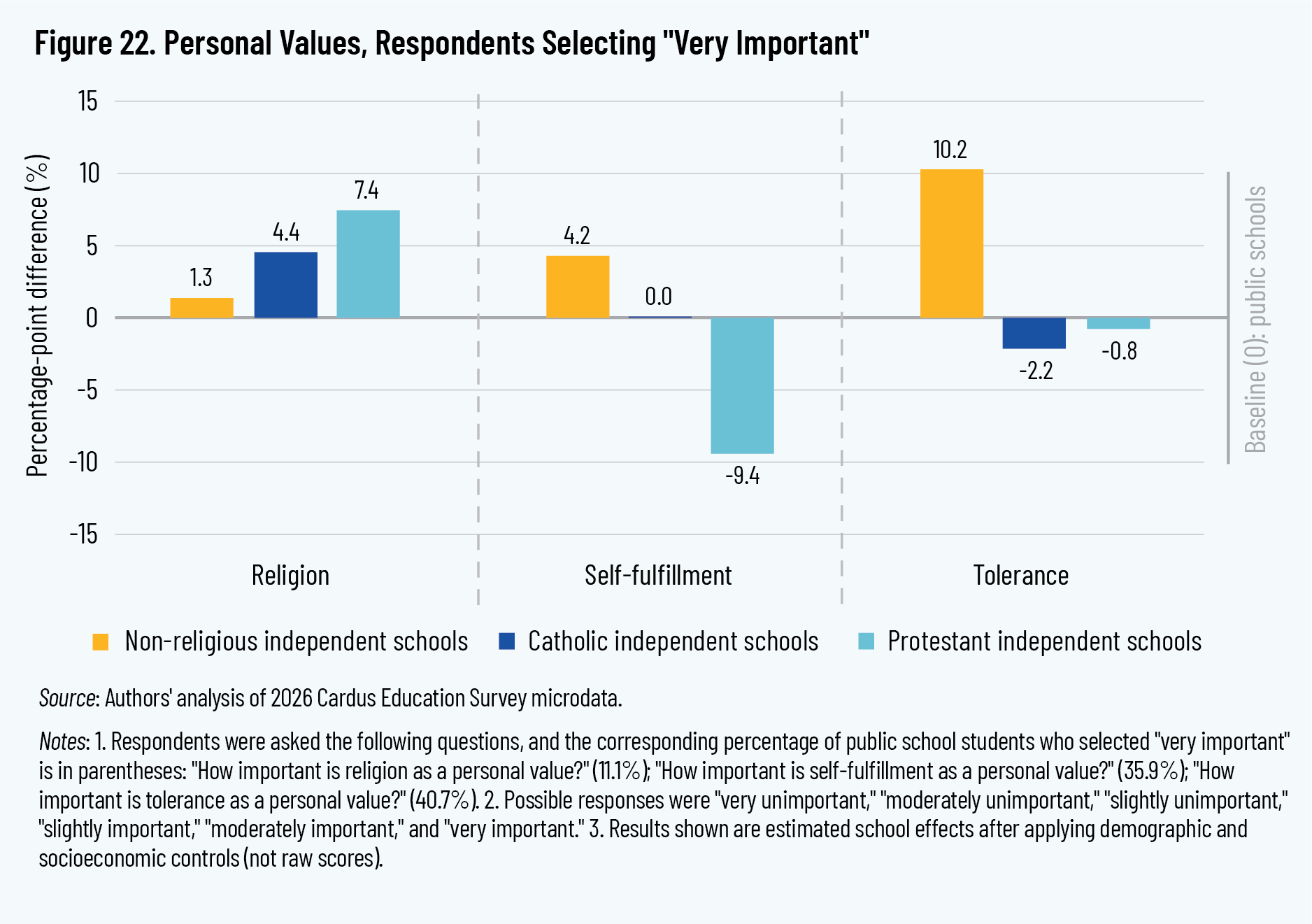
The CES followed the approach of the Wall Street Journal/NORC poll, mentioned earlier, to measure the importance of religion, self-fulfillment, and tolerance as personal values. Graduates of independent Protestant schools were more likely than those of other school types to rate religion as a very important personal value, followed by graduates of independent Catholic schools. As for self-fulfillment as a personal value, graduates of independent non-religious schools were more likely than those of the other school types to consider it very important, whereas graduates of independent Protestant schools were much less likely, and independent Catholic school graduates were similar to their public school counterparts. Graduates of independent non-religious schools were much more likely to rate tolerance as a very important personal value, compared with graduates of all other school types (figure 22).
Family Formation
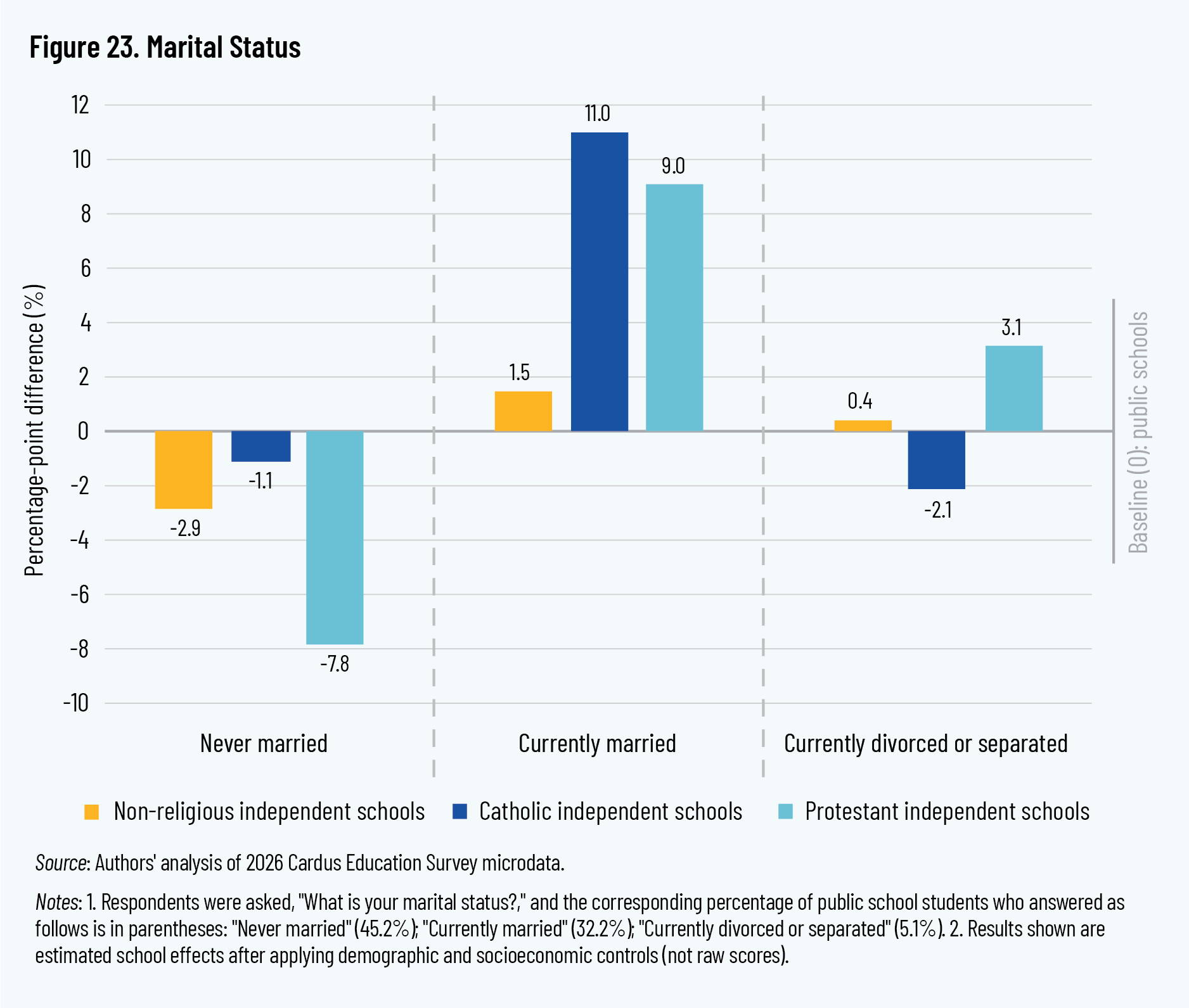
The family continues to be a foundational institution that supports the stability and flourishing of society. The CES asks about respondents’ marital status and number of children, as well as their values regarding both. In terms of marital status, graduates of independent Catholic schools were more likely to be married than graduates of the other school types, followed closely by independent Protestant school graduates. Independent Protestant school graduates were the least likely to have never been married. Other differences observed between school types were small and close to the public school baseline (figure 23).
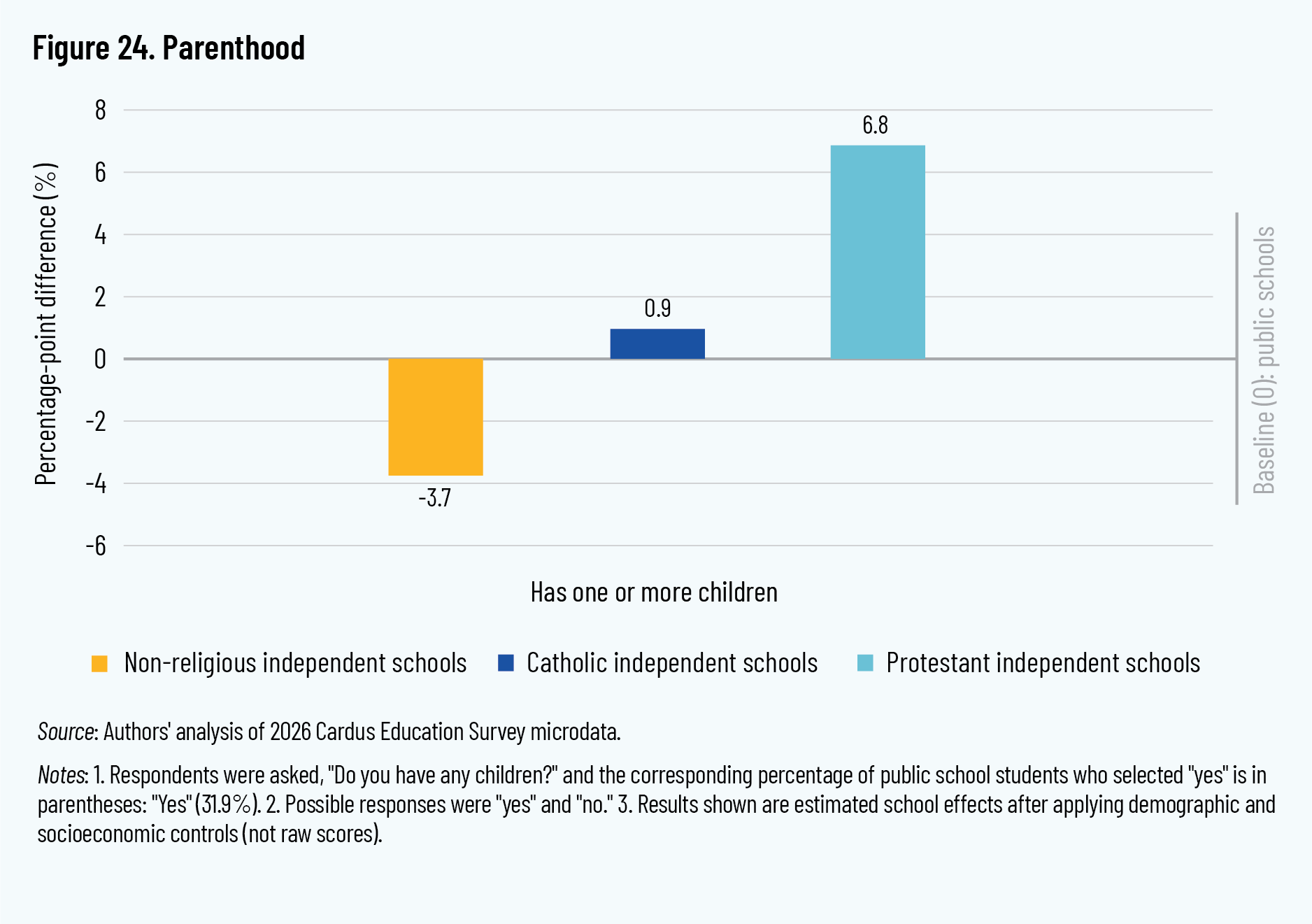
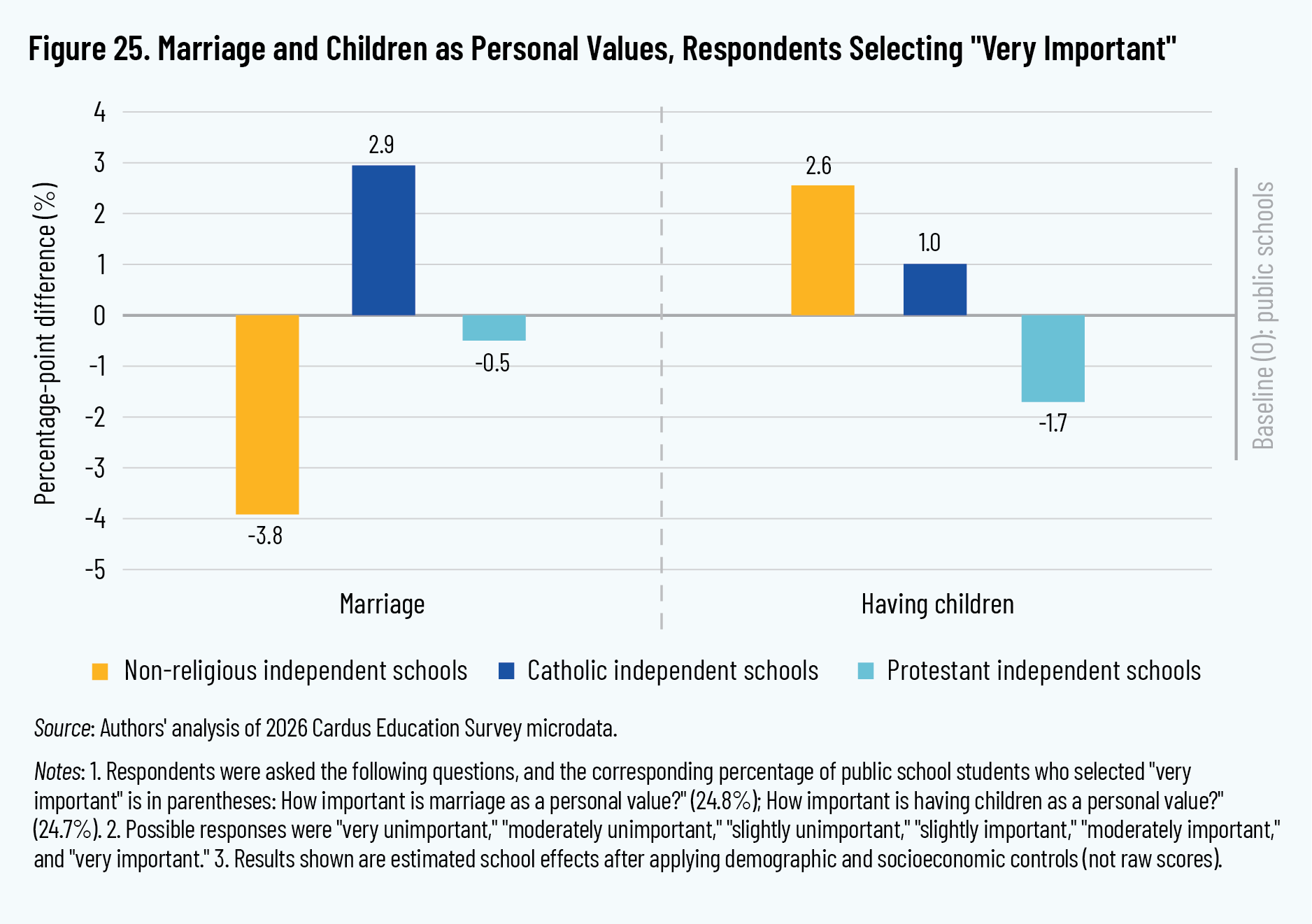
Another central aspect of family formation is childrearing. Graduates of independent Protestant schools were most likely to report having children, while independent Catholic school graduates were not much different from their public school counterparts on this measure (figure 24). Graduates of independent non-religious schools were least likely to report having children, and they had a lower likelihood of saying that marriage was “very important” while being most likely to say that having children was “very important” (figure 25).
Discussion
The Cardus Education Survey examines a range of holistic outcomes for a nationally representative sample of high school graduates, aged 24 to 39. This report shared the responses of graduates of independent school types (non-religious, Catholic, and Protestant schools) and compares these results with those of graduates of public schools (language-majority, language-minority, and Catholic public schools). By controlling for a range of respondents’ demographic characteristics, the CES enables estimating school effects—meaning, the difference that attending a specific kind of school makes.
The CES asks respondents about their perception of their high school quality and experiences, as well as how they are faring in adulthood on a range of holistic outcomes, including educational attainment and employment outcomes, civic formation, mental and physical health, faith formation, and family formation. The main report, “The Difference a School Makes: 2026 Cardus Education Survey Findings for Canada,” found differences in these outcomes for independent school graduates as compared to other school sectors.
This discussion section identifies five themes emerging from the data and considers them in light of other research and data on the independent school sector in Canada. Although the CES data are correlational and as such do not allow for identifying the causes of observations, the data suggest avenues for further exploration and research.
Small Schools, Big Impact
The CES findings suggest that graduates of all independent school types are more likely than their public school counterparts to rate positively the quality of their education, preparation for success in post-secondary academic settings, and preparation for success in a job or career. They are also more likely to report that their school was a “close-knit community” and to include school principals among the positive relationships they had with school staff.
Although there may be a tendency to attribute these kinds of benefits of independent schooling to socioeconomic factors, there are two reasons that this would not be accurate. First, the CES controls for demographic background characteristics of respondents, such as whether the respondent grew up in poverty. Second, across Canada, only about 5 percent of independent schools are “top-tier,” that is, highly selective preparatory schools; thus, it is inaccurate to equate “independent school” with “elite private school.” In actuality, about half of the sector consists of religious schools, while most of the remainder consist of schools organized around a particular pedagogy or educational emphasis—Montessori, Waldorf, classical, STEM, arts, special education, and so forth. Ontario provides particularly strong evidence of the non-elite nature of the vast majority of independent schools; of Ontario’s 1,445 independent schools, just sixty-one (4.2 percent) were “top tier.” 26 26 Hunt et al., “Naturally Diverse.” Cardus’s study of Ontario independent school parents concludes that they are “largely middle-class, ordinary Ontarians.” While their average incomes are somewhat higher than the Ontario average, more than two-thirds of parents reported making major financial adjustments to afford tuition.
If socioeconomic status is not a primary factor for the observed benefits for outcomes of independent school graduates, what other factors might there be? One factor may be smaller school size and/or smaller classroom sizes within a given school. Available provincial evidence suggests that independent schools in Canada tend to operate at a considerably smaller scale than public schools do. In Ontario, three-quarters of independent schools with enrollment data in 2019–20 enrolled fewer than 150 students, while 90 percent enrolled fewer than 300—leading Cardus researchers to conclude that the “small, local, intimate community school is typical of the sector.” 27 27 Hunt et al., “Naturally Diverse.” Alberta shows a similar pattern: 75 percent of independent schools reporting enrollment in 2022–23 had fewer than 300 students, and 51 percent reported fewer than 150 students. 28 28 Hunt and DeJong VanHof, “Exploring Alberta’s Independent School Landscape.” British Columbia provides a useful direct comparison with the public school sector: In 2024–25, independent schools enrolled an average of 270 students, compared with an average of 389 students in public schools. 29 29 British Columbia Ministry of Education and Child Care, “Education and Child Care Estimates.”
Available evidence also suggests that the relatively small scale of many independent schools may itself offer educational advantages. Research on school size has generally found benefits associated with smaller schools, including higher achievement and attendance, stronger student engagement, and more favourable perceptions of the school environment. 30 30 Leithwood and Jantzi, “A Review of Empirical Evidence”; Egalite and Kisida, “School Size and Student Achievement.” For religious schools in particular, smaller scale may also help facilitate the communal organization—characterized by close student-teacher relationships, shared norms and commitments, and strong connections between school and family—that research has identified as an important feature of effective Catholic schooling. 31 31 Bryk et al., Catholic Schools and the Common Good. Thus, while independent schools in Canada are small in terms of enrollment, they seem to evidence a sizeable, positive difference in terms of a range of graduate outcomes.
Contributing to the Common Good
The CES provides evidence that the common-good outcomes essential to democracy are being produced in independent schools. For many common-good outcomes, graduate outcomes for independent schools match—and in many cases, outperform—those for public schools. For example, graduates of independent Protestant schools were more likely than graduates of all other school types to donate their money to a non-profit charity and to report doing any unpaid, volunteer work within the previous twelve months. Graduates of independent Catholic and non-religious schools trailed slightly behind when it came to volunteering but were similar to their public school counterparts in charitable giving.
These findings confirm those of earlier CES reports, standing “in contrast to the popular stereotypes” about religious and specifically “Christian schools as promoting a socially fragmented, anti-intellectual, politically radical” lifestyle. 32 32 Casagrande et al., “Rethinking Public Education,” 5. The CES data show otherwise: Independent schools, including Catholic and Protestant ones, are producing the kinds of graduate outcomes that enable democratic societies to flourish. The data also support other research findings, such as a recent meta-analysis of fifty-seven studies and 531 effect sizes finding that independent schooling was positively associated with civic outcomes overall, including political tolerance, civic knowledge and skills, and voluntarism and social capital. 33 33 Shakeel et al., “The Public Purposes of Private Education.” Earlier research similarly found little evidence that independent schooling undermines democratic citizenship and, in many cases, found independent school students and graduates to be as or more willing than their public school counterparts to support civil liberties for groups with whom they disagree. 34 34 Wolf, “Civics Exam.” These findings are particularly important because political tolerance provides a direct test of the “echo chamber” concern: It measures not simply whether people share common values but also whether they are willing to respect the rights and participation of those whose views they disagree with.
Religious distinctiveness of independent schools, therefore, need not be at odds with preparation for life in a pluralistic society. Research on Catholic schooling has long suggested that schools characterized by strong shared commitments and communal organization can simultaneously cultivate responsibility toward the wider community. 35 35 Bryk et al., Catholic Schools and the Common Good. More broadly, evidence of volunteering, civic participation, social capital, and political tolerance among graduates of independent non-religious and religious schools suggests that strong school communities can serve as sites of civic formation rather than social withdrawal. While the research does not imply that every independent school avoids insularity or prejudice, the weight of the evidence challenges the assumption that educating students within a distinctive moral or religious community necessarily diminishes their capacity to engage constructively with people who believe differently.
Fulfilling Their Religious Missions
Prior research suggests that Christian schooling can have a lasting formative influence on students’ religious beliefs and practices, particularly in Protestant schools. Longitudinal data from the National Longitudinal Study of Adolescent Health showed that young adults who had attended independent Protestant schools were substantially more religious than those who had attended independent non-religious schools, even after accounting for family background and other factors. Importantly, part of this difference was explained by the religious environment of the schools themselves. 36 36 Uecker, “Catholic Schooling.” CES findings show a similar pattern across multiple nationally representative US samples. Independent Protestant school graduates consistently report higher likelihood of belief in God and life after death, prayer, Bible reading, and religious-service attendance than do graduates of public schools or independent non-religious schools, and many of these differences persist after demographic controls. 37 37 Swaner et al., “School-Sector Influence.” More recent CES analyses also find that within both Protestant and Catholic independent school types, graduates who reported that their school prepared them very well for a vibrant spiritual life were substantially more likely to exhibit strong religious beliefs and practices, suggesting that the strength of a school’s formative emphasis, not simply its religious designation, matters. 38 38 Swaner et al., “Enduring Faith.”
Independent Catholic and Protestant schools generally understand spiritual and moral formation not as an incidental by-product of schooling but as a central educational purpose, expressed through curriculum, worship and devotional practices, relationships, community norms, and an explicitly religious account of the good life. It is therefore reasonable to expect that the clearest school effects would appear precisely in the domain that they most intentionally seek to shape. Spiritual formation is routinely embedded in independent Christian schools’ stated missions and desired student outcomes, making it a core criterion by which they understand educational effectiveness. 39 39 Drexler and Bagby, “Defining and Assessing Spiritual Formation.”
Religious School Graduates and Flourishing
For questions drawn from the Harvard Flourishing Measure, lower scores were evidenced for graduates of independent religious schools in the areas of meaning and purpose, character, and close social relationships. Although none of the differences were statistically significant, they merit exploration, as they are curious given the overwhelming research on the benefit of religiosity to individual flourishing. 40 40 VanderWeele, “On the Promotion of Human Flourishing.” There are several possible explanations for the CES findings, when the data are considered in light of other research on religiosity in Canada in particular.
First, Cardus researchers using Angus Reid Institute data found that highly religious Canadians reported lower levels of satisfaction than Canadians overall, across several measures—including their finances, relationships, sense of welcome in their communities, national circumstances, and overall quality of life—while highly religious Americans were more satisfied than Americans overall, on these same measures. The research suggests that one possible explanation for this divergence is the increasingly minority position of religious Canadians within a more secular social context, although the data cannot establish a causal relationship. 41 41 Pennings and Swaner, “Religion for the Common Good.” Thus, lower CES scores for happiness and close social relationships might be explained, at least in part, by the status of religious persons as minorities in Canadian society.
When it comes to the findings related to character, one possible explanation is that differences in self-reported prosocial behaviour reflect, at least in part, differences in the standards that respondents use to evaluate themselves. The Angus Reid Institute data found that highly religious Canadians are more likely to hold objective conceptions of morality, to understand human behaviour through concepts such as sin and salvation, and to place particular importance on virtues such as honesty, forgiveness, and concern for others. 42 42 Angus Reid Institute, “Spirituality in a Changing World.” Consequently, religious respondents may evaluate their own behaviour against a more demanding moral standard than their less-religious counterparts do. This possibility is particularly relevant for measures that ask respondents to assess how well they are “doing good” rather than measuring specific behaviours directly. At the same time, other research has found that religious people may rate themselves favourably on traits central to their religious identities—so differences in reference standards should be treated as a possible explanation, rather than an established effect.
Bucking Family Formation Trends
Graduates of independent religious schools generally showed stronger patterns of family formation, with independent Catholic school graduates most likely to be married and independent Protestant school graduates most likely to have children. By contrast, independent non-religious school graduates were somewhat less likely to have children, compared with their public school counterparts. These findings are important to situate within the larger Canadian context for marriage and childbearing, the rates of which have declined substantially in Canada over recent decades. The crude marriage rate has fallen from roughly nine marriages per one thousand Canadians in the early 1970s to approximately five or fewer in recent decades, while married families have declined as a share of all Census families, and common-law and unpartnered living have become more prevalent. 43 43 Statistics Canada, “Sustained Decline”; Cardus, “The Canadian Marriage Map.” Fertility has followed an even sharper recent trajectory. Canada’s total fertility rate has declined since 2009 and reached a record low of 1.25 children per woman in 2024, placing Canada among countries characterized as having “ultra-low” fertility. 44 44 Statistics Canada, “Fertility and Baby Names, 2024.” These trends reflect not simply changing family preferences but an important gap between the family lives that Canadians desire and those they expect to achieve or do achieve.
Cardus research provides particularly strong evidence of this gap. A 2025 survey of three thousand Canadian adults aged 18 to 44 found that, on average, women considered 1.97 children as their ideal family size but intended to have 1.54, while men desired 2.13 children but intended to have 1.70. 45 45 Cardus, “The Canadian Marriage Map.” More strikingly, among Canadians aged 40 to 44—that is, near the end of their reproductive years—more than half reported having fewer children than they wanted, while only about 5 percent had more than they wanted. Earlier Cardus research similarly found that nearly half of Canadian women approaching the end of their reproductive years had fewer children than they considered ideal. Thus, Canada’s falling fertility rate should not be interpreted simply as Canadians’ achieving a preference for smaller families: For a substantial portion of the population, actual family size falls short of stated desires. 46 46 Stone, “She’s (Not) Having a Baby”; Stone, “Home Alone.” The marriage story is somewhat different: Available evidence does not establish an equivalent widespread “marriage gap,” but it does show that marriage remains favourably regarded even as fewer young Canadians marry. Among partnered 25- to 34-year-olds who intended to marry, nearly half identified marriage as a demonstration of love and commitment, even as marriage has become less common and occurs later in life. 47 47 Mitchell and Day, “For Love or Money.”
Given the finding that graduates of independent religious schools generally demonstrate stronger patterns of marriage and family formation, while independent non-religious school graduates trend modestly in the opposite direction, a school’s religious character may matter for how graduates approach family life—and may provide a source of renewal amid broader trends of decline in family formation in Canada.
Policy Implications
Given the overall CES findings and these themes emerging from the data, there are clear implications for educational policy. In a pluralistic democracy, there is no compelling justification for maintaining a monopoly on education that privileges non-religious and/or public schooling. In fact, it may be detrimental, given the pattern of better outcomes for graduates of independent religious schools across multiple dimensions. Consequently, educational funding and regulations should support increased access to a robust mosaic of school types and educational pathways. The CES data underscore an important reality: Educational opportunities that align with diverse values, beliefs, and priorities bolster the common good of Canadian society.
References
Angus Reid Institute. “Spirituality in a Changing World: Half Say Faith Is ‘Important’ to How They Consider Society’s Problems.” Angus Reid Institute, May 17, 2017. https://angusreid.org/religion-in-canada-150-part-two/.
British Columbia Ministry of Education and Child Care. Education and Child Care Estimates: 2025/26. 2025. https://docs.openinfo.gov.bc.ca/Education_and_Child_care_Estimates_Notes_2025.pdf.
Bryk, A.S., V. Lee, and P. Holland. Catholic Schools and the Common Good. Harvard University Press, 1993.
Cardus. “The Canadian Marriage Map.” Cardus, 2025. https://cardus.d2.barefootdigital.co/research/family/reports/the-canadian-marriage-map/.
Casagrande, M., R. Pennings, and D. Sikkink. “Rethinking Public Education: Including All Schools that Contribute to the Common Good.” Cardus, 2018. https://cardus.d2.barefootdigital.co/research/education/reports/rethinking-public-education.
Chen, Y., C. Hinton, and T.J. VanderWeele. “School Types in Adolescence and Subsequent Health and Well-Being in Young Adulthood: An Outcome-Wide Analysis.” PLOS ONE 16, no. 11 (2021): e0258723.
Chingos, M., D. Kuehn, T. Monarrez, P.J. Wolf, J.F. Witte, and B. Kisida. The Effects of Means-Tested Private School Choice Programs on College Enrollment and Graduation. Urban Institute, 2019.
DeJong VanHof, J., and J. Ko. “School’s Out for the Status Quo: How Ontario’s 300+ New Independent Schools Reflect the Desire for Educational Alternatives.” Cardus, 2026. https://cardus.d2.barefootdigital.co/research/education/reports/schools-out-for-the-status-quo/.
DeJong VanHof, J., L.E. Swaner, and A. Cheng. “The Difference a School Makes: 2026 Cardus Education Survey Findings for Canada.” Cardus, 2026. https://cardus.d2.barefootdigital.co/research/education/reports/the-difference-a-school-makes.
Drexler, J., and A.H. Bagby. “Defining and Assessing Spiritual Formation: A Necessity for Christian Schooling.” International Christian Community of Teacher Educators Journal 16, no. 1 (2021). https://digitalcommons.georgefox.edu/icctej/vol16/iss1/2/.
Egalite, A.J., and B. Kisida. “School Size and Student Achievement: A Longitudinal Analysis.” School Effectiveness and School Improvement 27, no. 3 (2016): 406–17.
Foreman, L.M. “Educational Attainment Effects of Public and Private School Choice.” Journal of School Choice 11, no. 4 (2017): 642–54.
Frenette, M., and P.C.W. Chan. “Academic Outcomes of Public and Private High School Students: What Lies Behind the Differences?” Analytical Studies Branch Research Paper Series, no. 367. Statistics Canada, 2015.
Hamlin, D., and A. Cheng. “Parental Empowerment, Involvement, and Satisfaction: A Comparison of Choosers of Charter, Catholic, Christian, and District-Run Public Schools.” Educational Administration Quarterly 56, no. 4 (2020): 641–70.
Hoffer, T. “Effects of Catholic School Attendance on Student Achievement: A Review and Extension of Research.” Journal of Catholic Education 1, no. 2 (1997).
Horwitz, I. “Religion and Academic Achievement: A Research Review Spanning Secondary School and Higher Education.” Review of Religious Research (2021).
Hunt, D., and J. DeJong VanHof. “Exploring Alberta’s Independent School Landscape: Diversity, Growth, and Trends.” Cardus, 2024. https://cardus.d2.barefootdigital.co/research/education/reports/exploring-albertas-independent-school-landscape/.
Hunt, D., J. DeJong VanHof, and J. Los. “Naturally Diverse: The Landscape of Independent Schools in Ontario.” Cardus, 2022. https://cardus.d2.barefootdigital.co/research/education/reports/naturally-diverse/.
Jeynes, W.H. “The Effects of Catholic and Protestant Schools: A Meta-Analysis.” Journal of Catholic Education 12, no. 2 (2008).
Kim, Y. “Catholic Schools or School Quality? The Effects of Catholic Schools on Labor Market Outcomes.” Economics of Education Review 30 (2011): 546–58.
Leithwood, K., and D. Jantzi. “A Review of Empirical Evidence about School Size Effects: A Policy Perspective.” Review of Educational Research 79, no. 1 (2009): 464–90.
Mitchell, P.J., and L.L. Day. “For Love or Money? Why Canadian Young Adults Marry . . . or Don’t.” Cardus, 2021. https://cardus.d2.barefootdigital.co/research/family/reports/for-love-or-money/.
Pakaluk, C.R., and N. Swanson. “A Good Fit: How Matching Students and Schools by Religion Improves Academic Outcomes.” Cardus, 2021. https://cardus.ca/research/education/reports/a-good-fit/.
Pennings, R., and L.E. Swaner. “Religion for the Common Good: Canada and the United States in 2025.” Cardus, 2025. https://cardus.d2.barefootdigital.co/research/spirited-citizenship/reports/religion-for-the-common-good/.
Shakeel, M.D., P.J. Wolf, A. Heape Johnson, M.A. Harris, and S.R. Morris. “The Public Purposes of Private Education: A Civic Outcomes Meta-Analysis.” Educational Psychology Review 36, no. 40 (2024): 1-41. https://doi.org/10.1007/s10648-024-09874-1.
Sikkink, D. “Religious School Differences in School Climate and Academic Mission: A Descriptive Overview of School Organization and Student Outcomes.” Journal of School Choice 6, no. 1 (2012): 20–39.
Statistics Canada. “Sustained Decline in the Crude Marriage Rate over the Past 50 Years.” Statistics Canada, November 14, 2022. https://www150.statcan.gc.ca/n1/daily-quotidien/221114/cg-b002-eng.htm.
Statistics Canada. “Fertility and Baby Names, 2024.” The Daily, September 24, 2025. https://www150.statcan.gc.ca/n1/daily-quotidien/250924/dq250924d-eng.htm.
Stone, L. “She’s (Not) Having a Baby: Why Half of Canadian Women Are Falling Short of Their Fertility Desires.” Cardus, 2023. https://cardus.d2.barefootdigital.co/research/family/reports/she-s-not-having-a-baby/.
Stone, L. “Home Alone: Why Most Canadians Have Fewer Children Than They Want.” Cardus, 2026. https://cardus.d2.barefootdigital.co/research/family/reports/home-alone/.
Swaner, L.E., A. Cheng, and J. Eckert, “School-Sector Influence on Graduate Outcomes and Flourishing: Findings from the 2023 Cardus Education Survey.” Cardus, 2024. https://cardus.d2.barefootdigital.co/research/education/reports/school-sector-influence-on-graduate-outcomes-and-flourishing/.
Swaner, L.E., J. Eckert, and A. Cheng. “Enduring Faith: Patterns of Religious Practice and Values Among Religious School Graduates.” Cardus, 2026. https://cardus.d2.barefootdigital.co/research/education/reports/enduring-faith/.
Uecker, J. “Catholic Schooling, Protestant Schooling, and Religious Commitment in Young Adulthood.” Journal for the Scientific Study of Religion 48, no. 2 (2009): 353–67.
VanderWeele, T.J. “On the Promotion of Human Flourishing.” Proceedings of the National Academy of Sciences 31, no. 114 (2017): 8148–56.
Wolf, P.J. “Civics Exam: Schools of Choice Boost Civic Values.” Education Next 7, no. 3 (2007): 66–72. https://www.educationnext.org/civics-exam/.
Wall Street Journal/NORC at the University of Chicago. “WSJ/NORC Poll March 2023.” https://s.wsj.net/public/resources/documents/WSJ_NORC_ToplineMarc_2023.pdf.